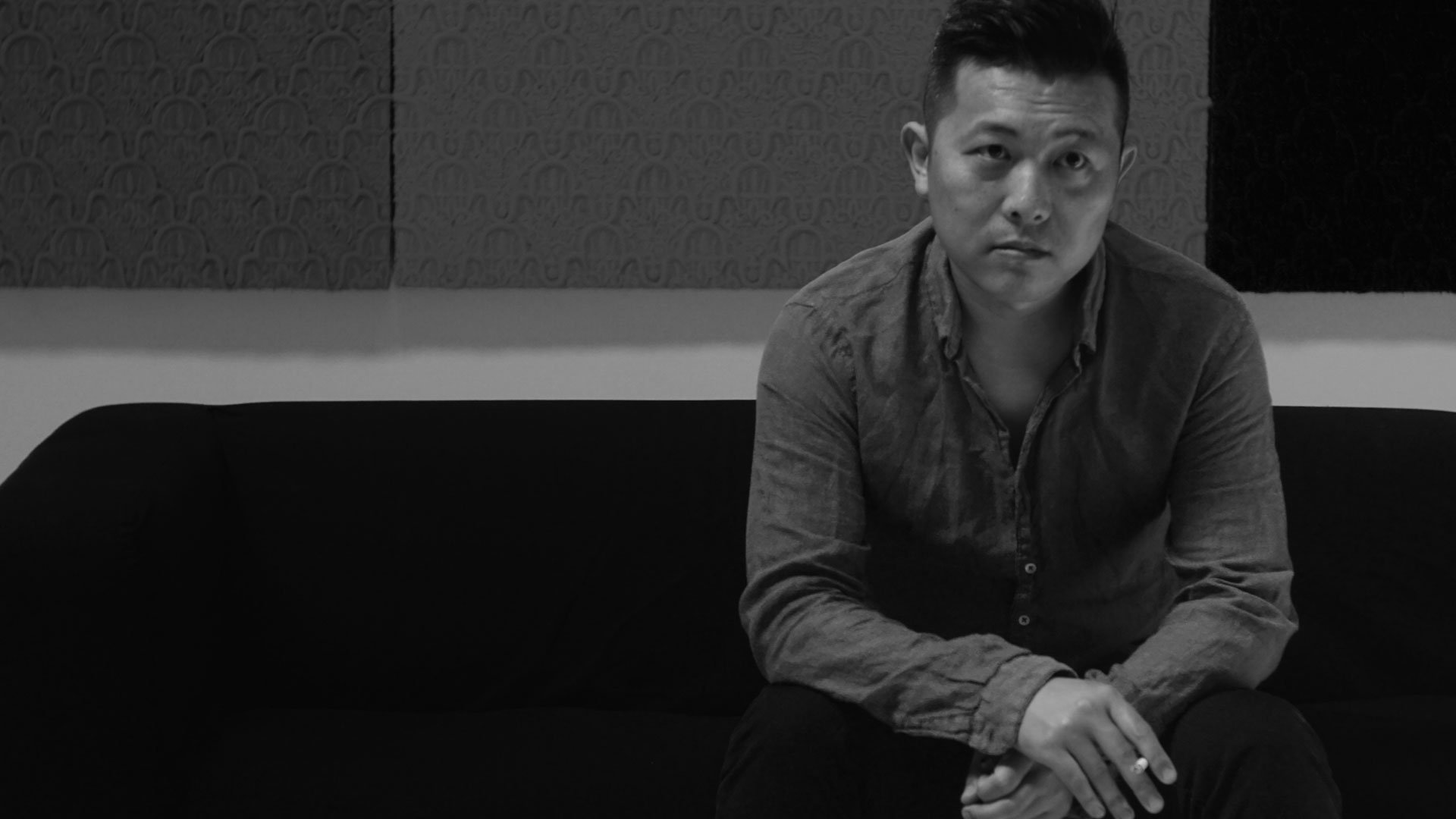
In Baku, Azerbaijan, contemporary painting encounters centuries of architectural history through The Skin of Truth, an exhibition dedicated to the work of Beijing-based artist Zhang Ji.
Presented by JD Malat Gallery as part of Fly to Baku Art Weekend, the exhibition takes place at the Heydar Aliyev Center from 30 October to 30 December 2026.
Bringing together works from The Skin of Truth and Ultima series, the exhibition explores the relationship between ancient symbolism, cultural memory and contemporary artistic expression.
Through intricate compositions and an unconventional painting technique, Zhang Ji transforms architectural ornamentation into a visual language of colour, geometry, rhythm and texture.
The result is an exploration of how the cultural traditions of the past continue to find new forms of expression in the present.
Zhang Ji: Reimagining the Language of Painting
For Zhang Ji, painting begins long before the first application of colour.
His The Skin of Truth series, initiated in 2011, grew from a childhood fascination with the intricate decorative reliefs he encountered in churches.
Over time, this early interest developed into an extensive investigation of religious architecture across different cultures.
Mosques, synagogues, Catholic churches, Hindu temples and Buddhist temples became important sources of inspiration, offering architectural details rich in symbolism, history and collective memory.
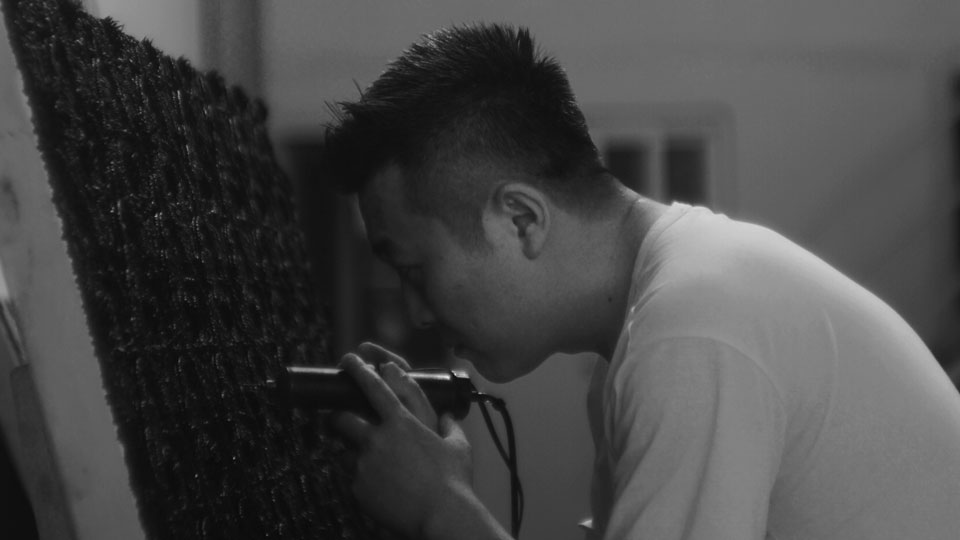
The artist’s creative process involves extensive travel, photography and sketching, through which he documents and studies architectural ornamentation.
Among the architectural references informing works in the exhibition are the Great Mosque of Córdoba, the Alhambra and Granada Cathedral, as well as the Alcázar and Palacio de las Dueñas in Seville.
Rather than reproducing these structures directly, Zhang Ji extracts selected motifs and transforms them through fragmentation, repetition and abstraction.
Architectural details gradually lose their original context, becoming intricate compositions defined by colour, geometry and rhythm.
In this transformation, painting becomes a means of exploring the relationship between historical traditions and contemporary experience.
A Different Approach to Painting
One of the most distinctive elements of Zhang Ji’s artistic practice is his unconventional technique.
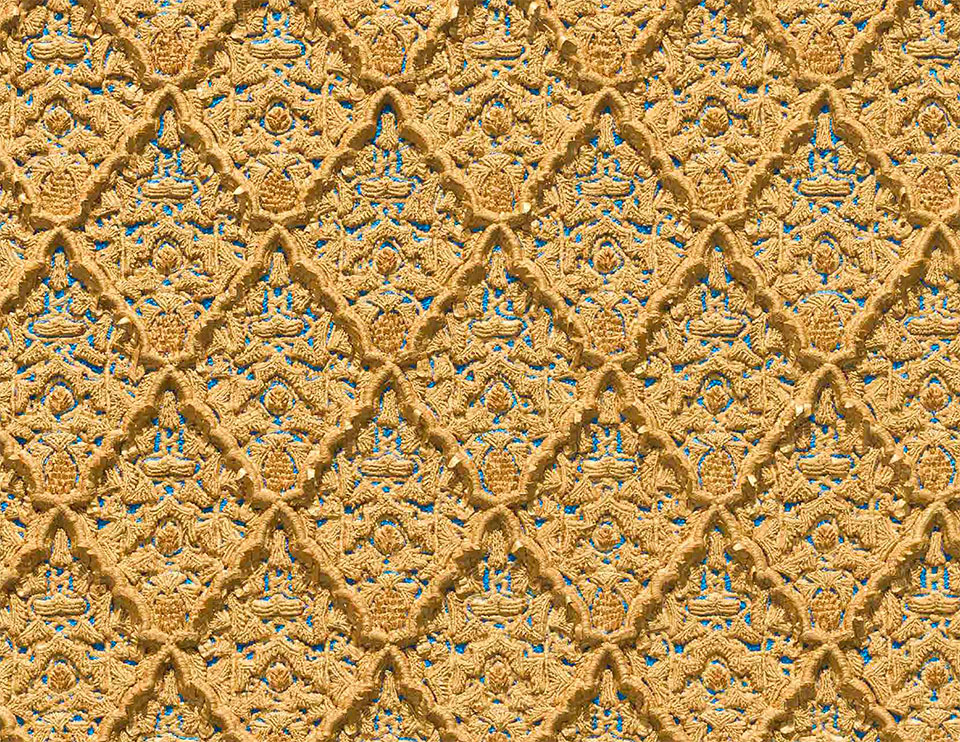
Rather than applying paint with a traditional brush, the artist uses a syringe to carefully build layers of oil paint directly onto the canvas.
The process is meticulous and labour-intensive, allowing intricate patterns and richly textured surfaces to emerge through repeated applications.
As the layers accumulate, the paintings develop an almost sculptural presence.
Their raised surfaces resemble bas-relief sculptures, challenging the conventional understanding of painting as a purely two-dimensional medium.
Viewed from a distance, the compositions can appear atmospheric and almost weightless. Up close, their physical density reveals the extraordinary precision and effort involved in their creation.
The result is a body of work that exists between painting and sculpture, where the surface itself becomes an essential part of the artistic experience.
Sacred Architecture and Collective Memory
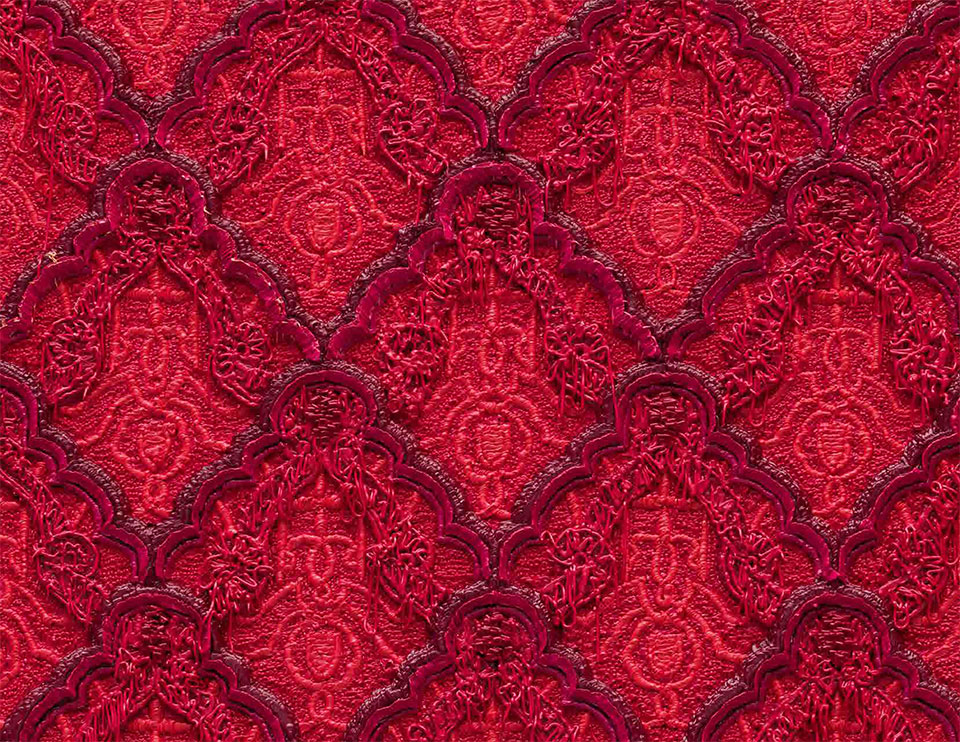
At the heart of The Skin of Truth is an investigation into the symbolic languages of sacred architecture.
Across cultures, religious buildings have preserved visual traditions through ornamentation, geometry and decorative relief.
For Zhang Ji, these architectural elements become the starting point for compositions that explore history, ritual and collective memory.
Through repetition and transformation, the original patterns gradually move beyond their specific religious or cultural associations.
What remains is an abstract visual language that retains traces of its historical origins while inviting new interpretations.
The paintings suggest that the meaning of an image does not necessarily reside in a fixed symbol.
Instead, meaning can emerge through the physical process of making the work and the contemplative experience of viewing it.
In this sense, Zhang Ji’s compositions invite audiences to engage with painting slowly, discovering the relationship between material, memory and perception.
Beyond Architecture: The Ultima Series
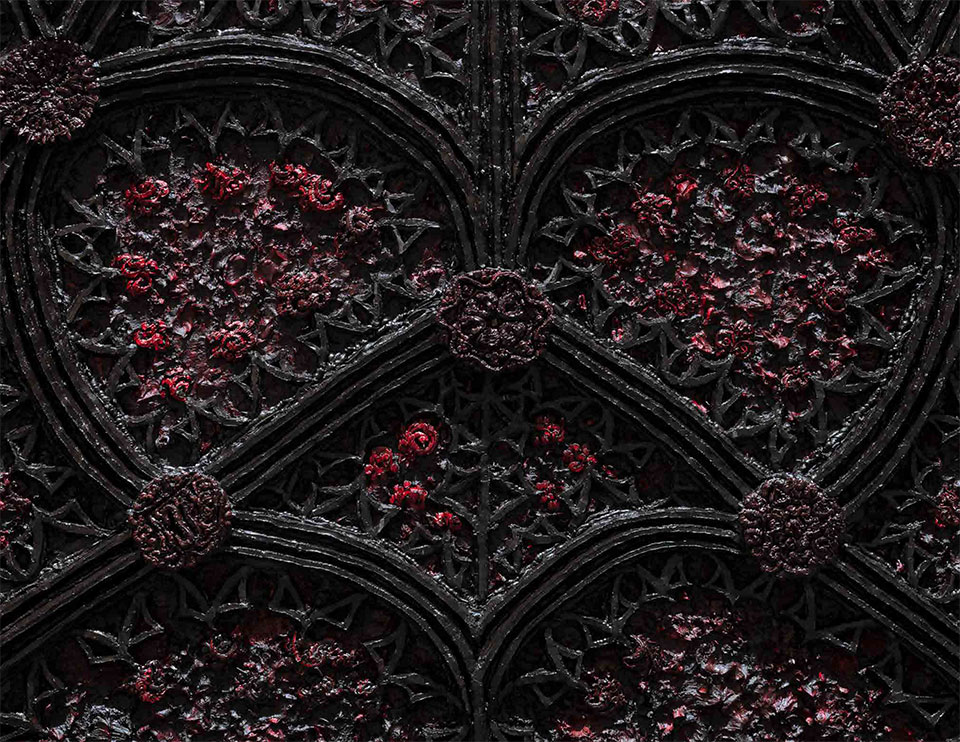
Alongside The Skin of Truth, the exhibition presents Ultima, a series that represents a further development in Zhang Ji’s exploration of abstraction.
While architectural references remain central to his earlier investigations, in Ultima these sources become increasingly difficult to identify.
Instead, the artist places greater emphasis on the fundamental elements of painting itself.
Colour, rhythm and material emerge as independent forces, allowing the compositions to move beyond recognisable architectural patterns.
The series shifts attention from what an image represents to the experience generated through its creation and observation.
Together, The Skin of Truth and Ultima reveal an evolving artistic practice in which historical memory and contemporary experimentation remain closely connected.
The Heydar Aliyev Center: An Architectural Dialogue
The exhibition’s setting provides a meaningful architectural context for Zhang Ji’s work.
Hosted at the Heydar Aliyev Center in Baku, The Skin of Truth brings the artist’s exploration of historical architectural traditions into a contemporary cultural environment.
The relationship between the paintings and their setting creates an opportunity to reflect on architecture as more than a physical structure.
In Zhang Ji’s practice, architectural details become carriers of cultural memory, capable of being transformed into new forms of artistic expression.
By presenting these works within a major cultural institution, the exhibition connects historical references with contemporary approaches to art and visual communication.
It is a dialogue between architecture and painting, between material and meaning, and between the cultural inheritance of the past and the creative possibilities of the present.
A Contemporary Perspective on the Past
Through The Skin of Truth, Zhang Ji demonstrates how historical imagery can be transformed into a distinctly contemporary artistic language.
His work moves between cultural traditions and artistic disciplines, combining architectural research with an experimental approach to painting.
Across both The Skin of Truth and Ultima, the relationship between surface, repetition, colour and memory becomes central to the viewer’s experience.
Each composition exists as an individual work while contributing to a broader exploration of how images endure and how the past continues to influence the present.
Presented as part of Fly to Baku Art Weekend, the exhibition offers an opportunity to discover an artist whose work challenges conventional boundaries between painting, sculpture and architecture.
Ultimately, The Skin of Truth invites a slower, more contemplative way of looking — one that reveals how artistic expression can connect histories, cultures and contemporary experiences.
Exhibition Information
Exhibition: The Skin of Truth | Zhang Ji
Presented by: JD Malat Gallery
Event: Fly to Baku Art Weekend
Dates: 30 October – 30 December 2026
Venue: Heydar Aliyev Center
Address: 1 Heydar Aliyev Avenue, Baku 1033, Azerbaijan
Opening Hours: Monday – Saturday, 10:00 AM – 7:00 PM
Exhibition Catalogue: JD Malat Gallery