There is a particular moment at the Medicine Festival when it begins to feel less like a festival and more like a meeting of worlds.
It might happen beside one of the ceremonial fires, during a conversation with a healer, in the middle of a song, inside a sweat lodge, while listening to an elder describe their relationship with the land, or simply while sitting around a table with somebody whose understanding of life comes from a tradition entirely different from your own.
This is where the idea of the “tribes” of the Medicine Festival becomes interesting.
The word itself can be overused in modern festival culture, where everybody is encouraged to find their tribe, join their tribe and dance with their tribe. At the Medicine Festival, however, there are communities present whose identities are far deeper than a festival friendship group. There are Indigenous peoples, cultural custodians, wisdom carriers, healers, artists, ceremonial leaders and practitioners carrying traditions that have travelled through generations.
They are not all part of one worldview, and that is precisely what makes the gathering so unusual.
The Medicine Festival’s ambition is to create a place where different communities can meet without requiring them to become the same.
The Diné
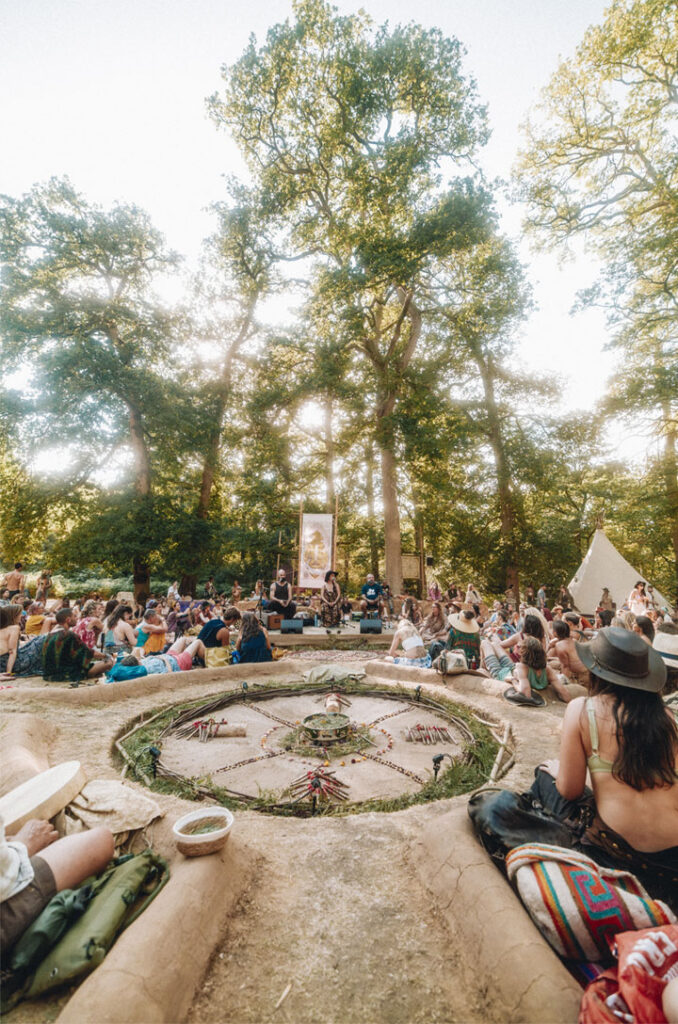
Among the traditions woven into the Medicine Festival’s 2026 theme were those of the Diné, the Indigenous people more commonly known as Navajo, whose ancestral homeland encompasses a vast area of the American Southwest.
The festival’s theme of Walking Together drew upon the Diné concept of Hózhóó, often translated through ideas of beauty, harmony, balance and right relationship.
Rather than seeing beauty simply as something visual, the concept encompasses a way of living in balance with oneself, one’s community and the wider world. It offered a particularly fitting philosophical backdrop for a festival concerned with connection and the relationship between people and the natural world.
Diné wisdom carrier Pat McCabe has been part of Medicine’s wider programme, bringing a perspective shaped by Diné traditions and by a lifetime of working across questions of ecology, community, spirituality and human responsibility. The festival’s post-event programme has continued to feature her alongside other thinkers and wisdom carriers as part of its wider exploration of ancestral and contemporary knowledge.
The Lakota and the Inipi
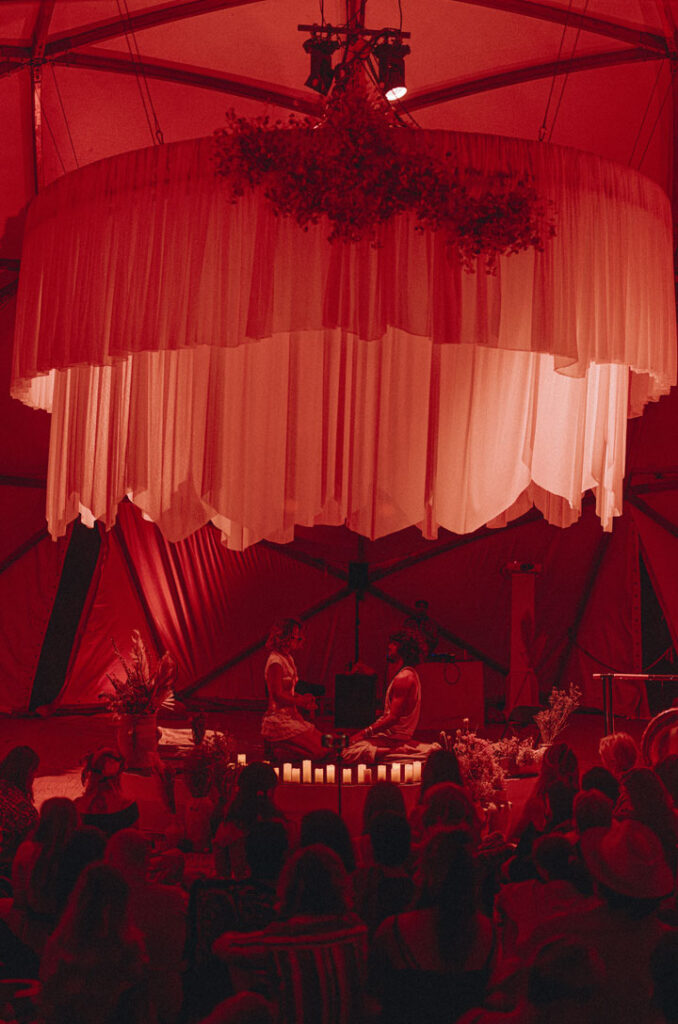
The Lakota tradition appeared in a different form through the festival’s sweat lodge programme.
The Inipi, or sweat lodge, is a ceremonial practice involving heat, prayer, purification and community, and Medicine offered different Inipi experiences during the gathering.
Among the practitioners was Jeremy Gordon, described by the festival as a Sun Dance Chief and Yuwipi medicine man with decades of ceremonial experience. His sessions were presented as opportunities for spiritual strength, rejuvenation, purification and clearing the path towards one’s prayer.
Mao Tatanka, a Colombian medicine man and spiritual leader, also led a Sundance Inipi, bringing another strand of ceremonial practice into the festival’s programme.
These experiences are important because they illustrate the difference between the tribes and communities represented at Medicine. They are not interchangeable versions of a generic “Indigenous spirituality”. Each comes with its own history, cultural context, teachings and responsibilities.
The Mexican and Mesoamerican traditions
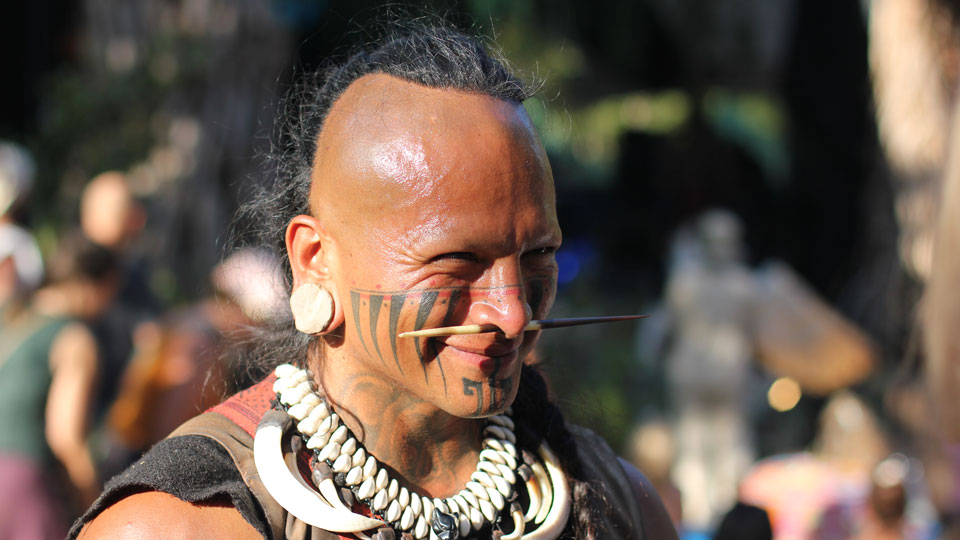
The Temazcal is another major thread running through Medicine.
A traditional Mexican sweat lodge, the Temazcal is often understood as a place of purification and renewal, with the enclosed, heated space sometimes described as representing the womb of the Earth.
At Medicine, several practitioners offered different forms of Temazcal, including Kusiy Volt, whose practice is connected to the Sacred Fire of Itzachilatlan tradition, alongside other ceremonial leaders working within Mexican traditions.
The festival also brought in practitioners whose work connects traditional healing with contemporary therapeutic approaches. One Temazcal session was led by Mexican medical anthropologist and body therapist Gabriel Amezcua, alongside psychotherapist Lisa W, combining ceremonial practice with approaches to embodiment, emotional expression and voice.
It is this kind of meeting between traditions and contemporary practice that gives Medicine much of its unusual character.
The Mapuche connection
Some of the people at Medicine carry several cultural identities at once.
María Valdivia, originally from Chile and carrying Mapuche ancestry through her mother, has spent decades learning from traditional healers and medicine carriers across South America. Her work includes Temazcal, Vision Quest and ceremonial practices, and she has continued this work internationally.
Her daughter, Kusiy Volt, grew up alongside her mother’s ceremonial work and eventually developed her own role as a Temazcal leader.
Their story offers a glimpse into another way that knowledge moves through communities: not simply through formal teaching, but through family, observation, participation and years spent accompanying those who came before.
The Yawanawa and the Amazon
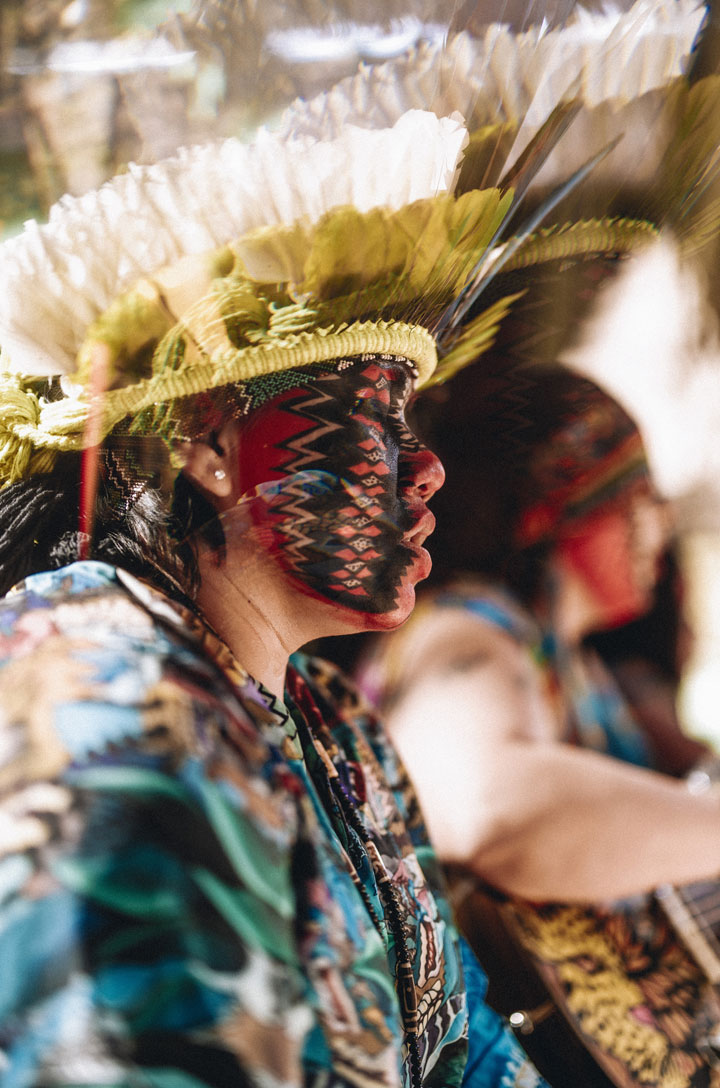
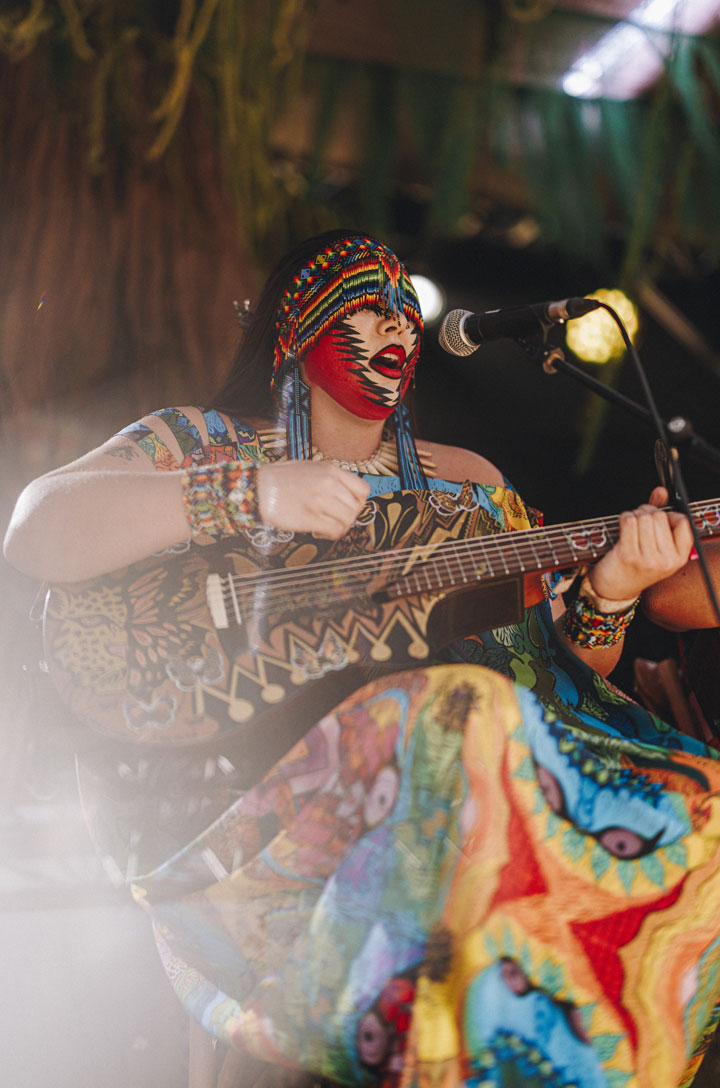
Medicine’s relationship with Indigenous communities also has roots in the Amazon.
One of the figures associated with the origins of the festival is Nixiwaka, an Amazonian chief from the Yawanawa people of Acre, Brazil.
The Yawanawa have a close relationship with the Amazon rainforest and maintain a rich cultural and spiritual tradition connected to the land, plants, animals, community and ceremony. The relationship between the festival and Indigenous communities was part of the inspiration for the Medicine Festival’s wider purpose, which extends beyond bringing Indigenous culture into a festival setting and towards supporting Indigenous-led projects and the preservation of cultural and ecological knowledge.
The Medicine Festival operates as a Community Interest Company, with profits intended to support organisations, projects and communities working to uplift and preserve sacred traditions, support Indigenous peoples and protect and regenerate the biosphere.
The First Peoples of Australia's Central Desert
Among the most remarkable visitors in 2026 were the Desert Minyma, women from Australia’s Central Desert who are Senior Aboriginal Traditional Law Women, Ngangkari healers, artists and cultural custodians.
Their presence offered visitors the opportunity to encounter one of the world’s oldest continuous living cultural traditions through conversation, art and traditional healing. They offered one-to-one Ngangkari healing sessions, as well as original paintings and bush medicines, with proceeds supporting the women, their families and community-led cultural programmes.
The festival was careful to describe these encounters not as performances, but as cultural exchanges requiring respect, listening and reciprocity.
That distinction is significant.
For visitors, the temptation at a festival can be to treat everything as an experience to be consumed, photographed and moved on from. Medicine’s approach asks for something different when engaging with living Indigenous traditions: come with humility, listen carefully and understand that not everything being shared is yours to take away.
The Kogi
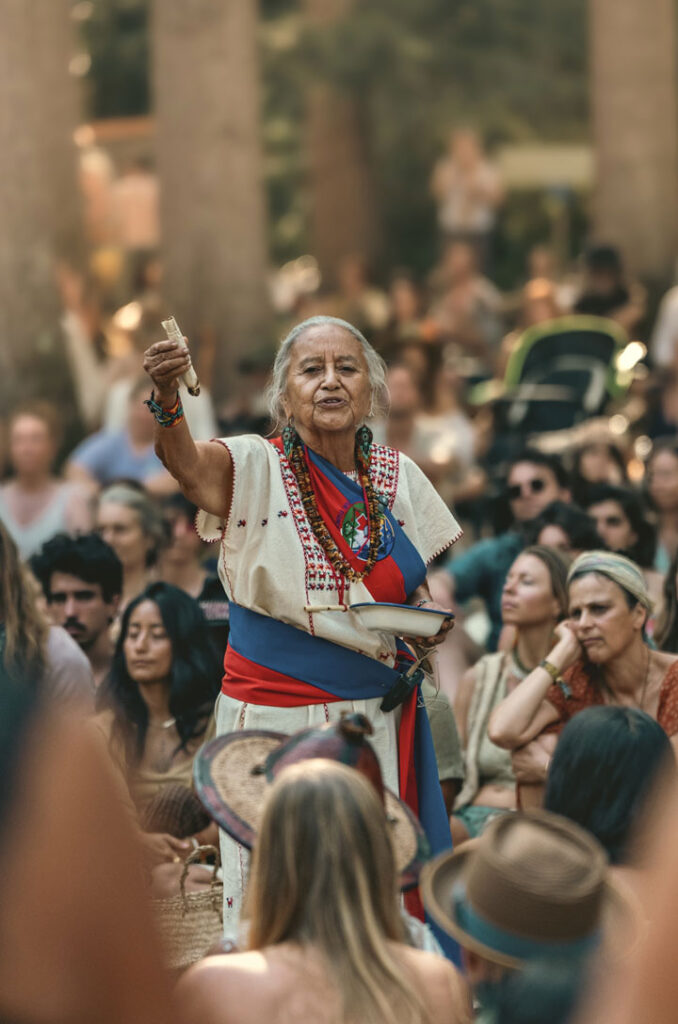
Another extraordinary cultural encounter came through Mamo Senchina, who offered Kogi divination consultations.
The Kogi people live in the Sierra Nevada de Santa Marta in Colombia and are known for maintaining a deeply land-centred worldview in which mountains, nature, community and spiritual responsibility are intimately connected.
Mamo Senchina’s divination offering gave visitors the opportunity to encounter this tradition through consultation rather than performance, creating one of those unusual Medicine moments where a cultural tradition becomes a conversation between two people rather than something presented from a stage.
The Muisca and Colombian traditions
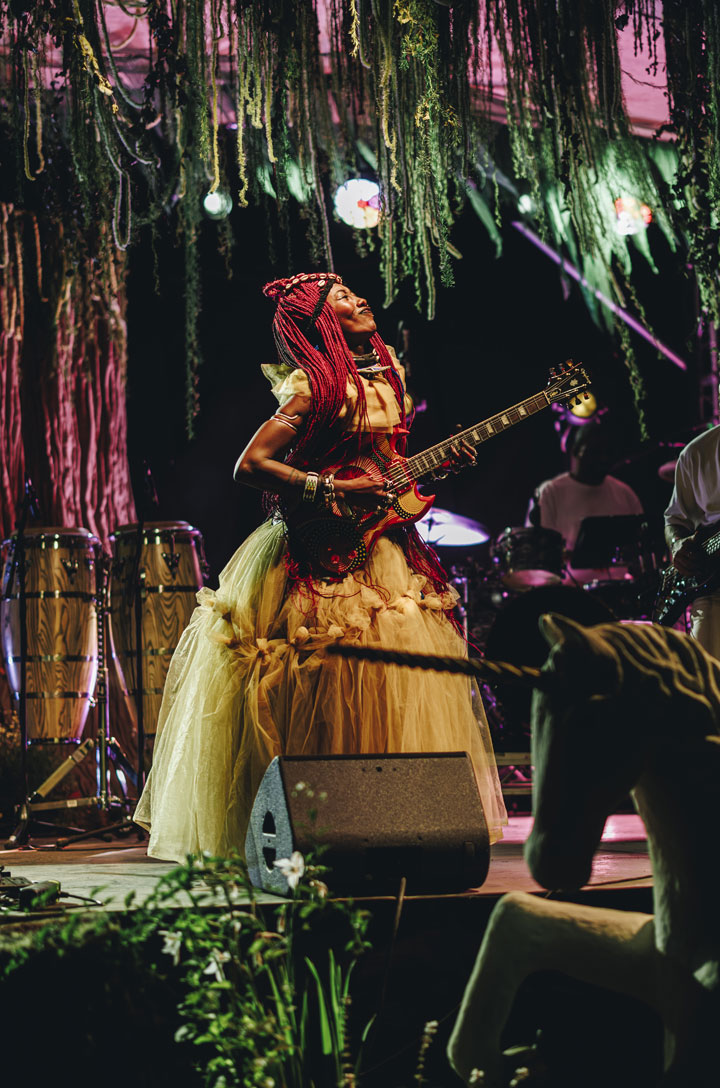
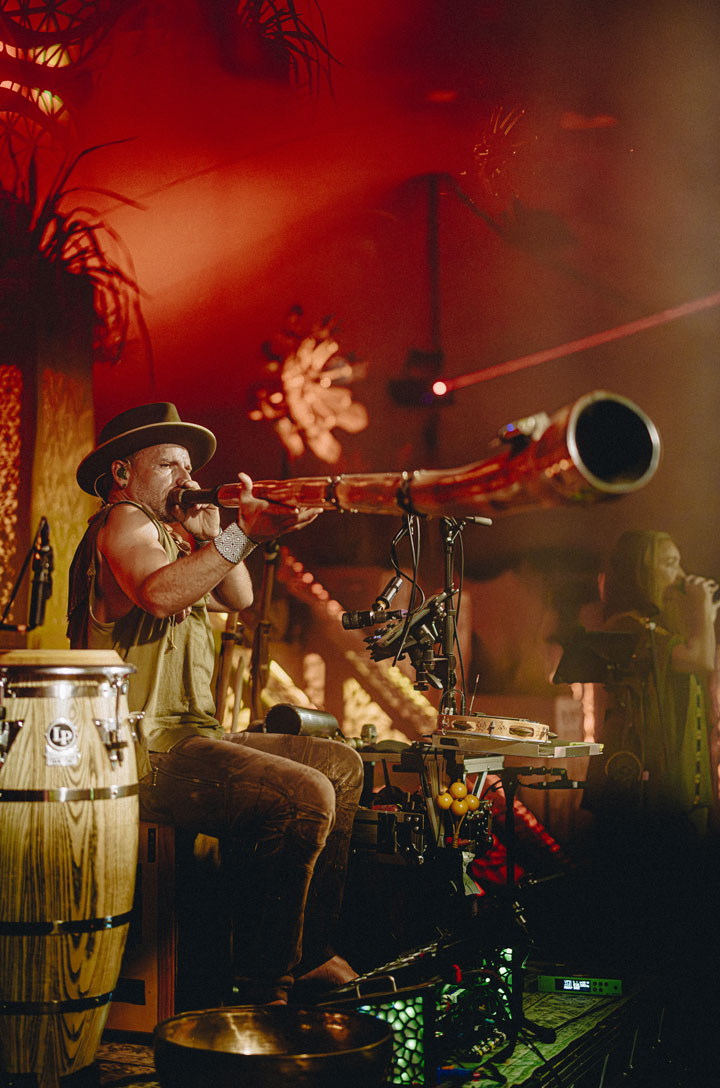
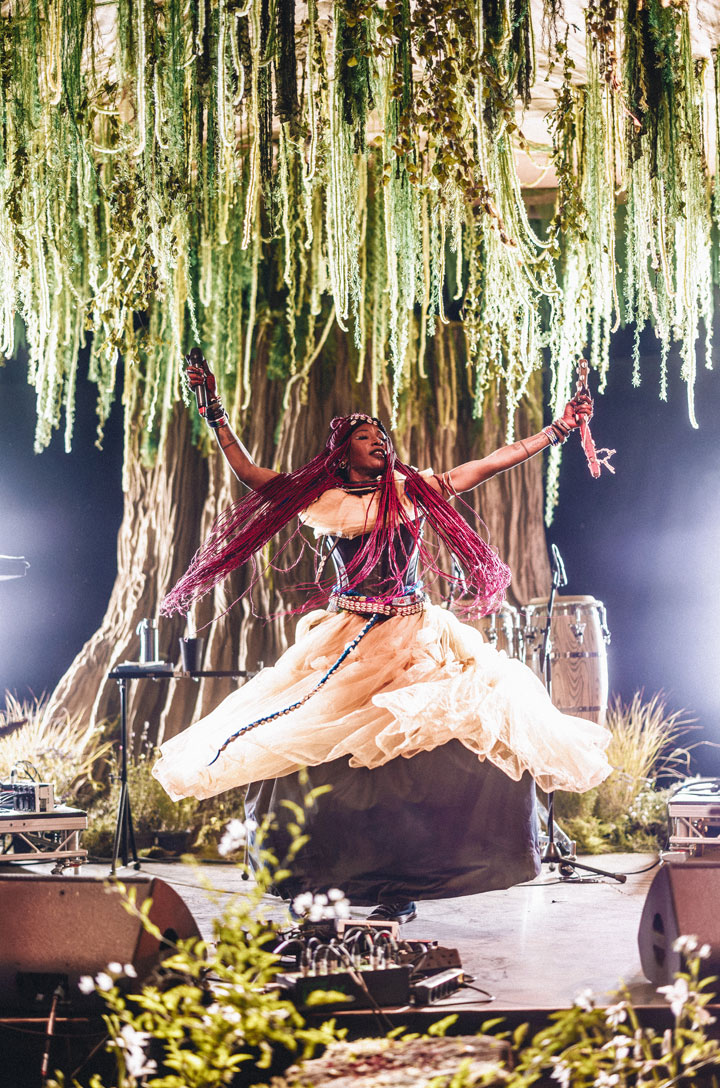
Colombia was represented in other ways too, through practitioners and artists working with traditions connected to the country’s Indigenous heritage.
Anthar Kharana, for example, brings music, sound and ceremonial practice into his work, drawing upon Muisca heritage alongside other influences.
There is a recurring pattern throughout Medicine in which music and ceremony overlap. A song can become a prayer, a drum can become a communal instrument, a dance can become a way of connecting people, and a performance can become something in which the audience is invited to participate rather than simply observe.
Two-Spirit traditions
Medicine’s exploration of Indigenous cultures also included conversations around gender and identity.
Roby Two Spirit, a Chilean ceremonial leader, Sun Dancer and Vision Quester with Mapuche ancestry, has worked with Temazcal and created spaces particularly attentive to Two-Spirit and queer people. Their presence adds another important dimension to the festival’s understanding of Indigenous traditions, particularly the fact that ideas about gender, identity and spiritual responsibility have existed in Indigenous societies in forms that do not necessarily fit modern Western categories.
This is another reason the word “tribes” can be misleading if it is used too casually. These are not simply groups of people who happen to share an interest in spirituality. They carry complex cultural identities, histories and relationships with their own communities.
The wisdom keepers without one obvious tribe
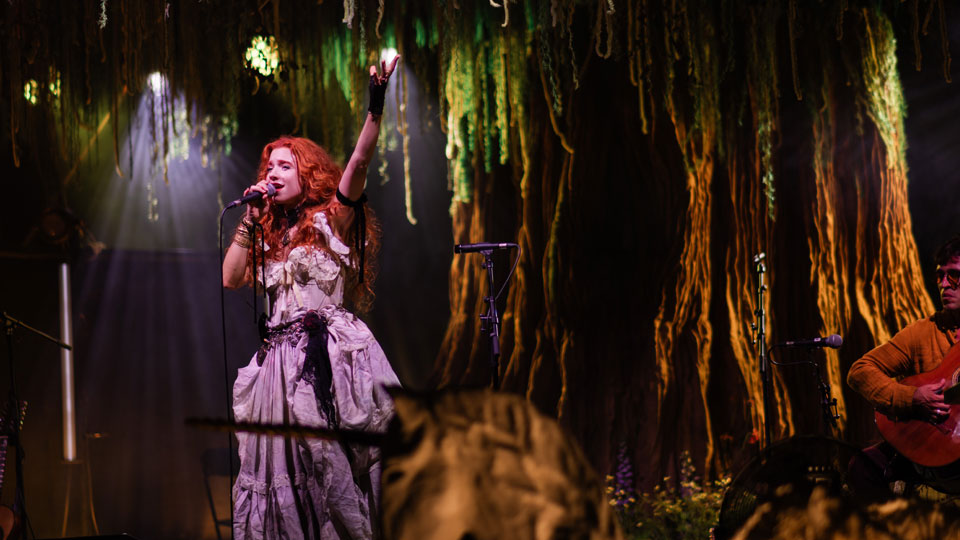
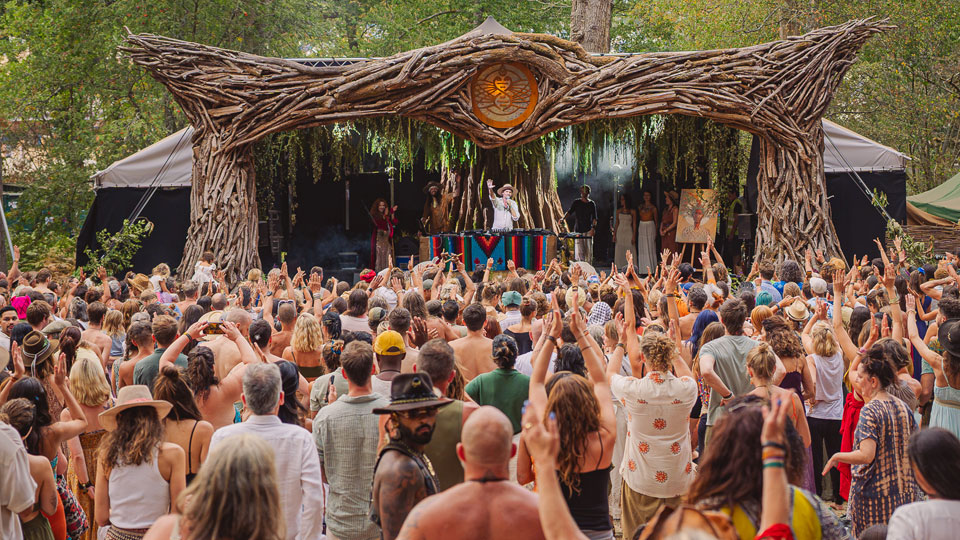
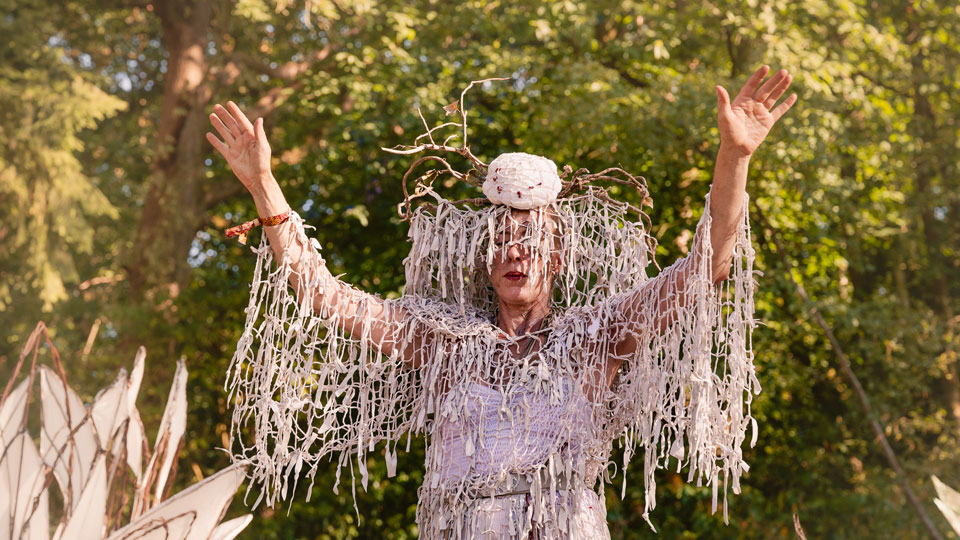
Then there are the people who do not fit neatly into one cultural category.
Medicine’s programme includes British elders, northern European traditions, contemporary herbalists, therapists, musicians, environmental thinkers and practitioners whose work draws from several different lineages.
Annie Spencer, described as a British Elder and ceremonialist, has spent decades bringing together psychology and earth-based spiritual traditions. Christiana Aro-Harle works across Tuvan, Finnish, Nordic and North American influences, while Colombian practitioner Anthar Kharana brings together sound, music and ancestral traditions.
These people form another kind of tribe: one based less on a single ancestry and more on a shared commitment to preserving, exploring and transmitting knowledge.
What connects all these tribes?
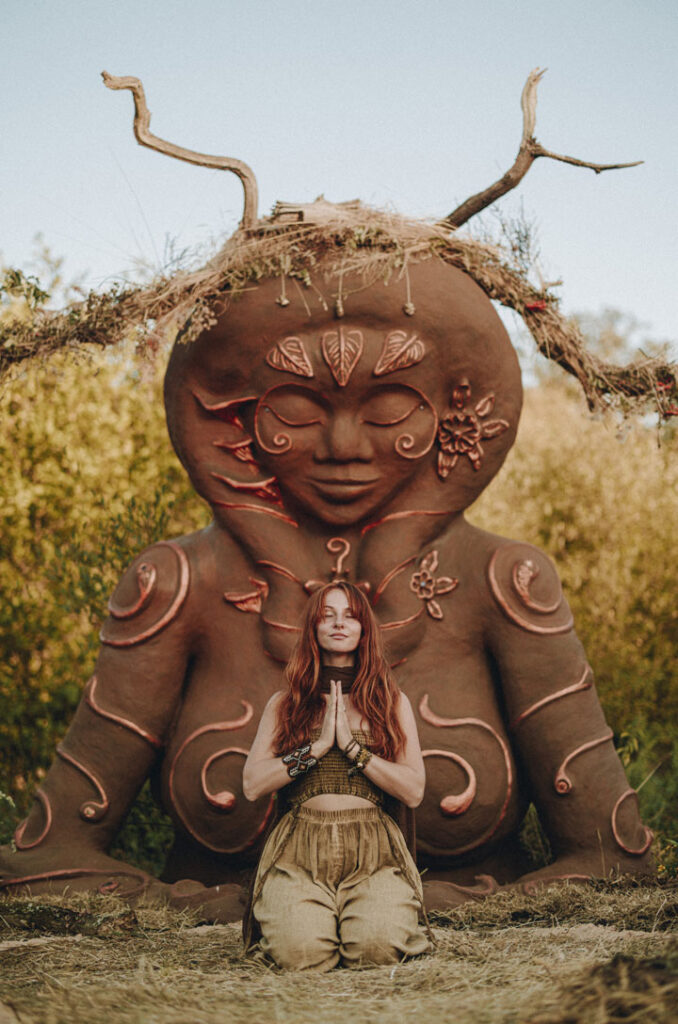
The most interesting thing about the Medicine Festival is that there is no single answer to this question.
The Diné, Lakota, Yawanawa, Kogi, Mapuche, Muisca and Aboriginal Australian traditions are distinct peoples with distinct histories and should not be flattened into one convenient category of “ancient wisdom”.
Yet the festival creates a space in which their representatives can appear alongside one another, as well as alongside British elders, artists, healers, environmentalists, musicians and contemporary practitioners.
What connects them is not that they all believe the same thing, but that the festival is interested in the relationship between people, place, culture and the living world.
That is where Walking Together, the theme of the Medicine Festival 2026, becomes more than a piece of festival branding.
Walking together does not necessarily mean walking in exactly the same direction or believing exactly the same things. It can mean travelling alongside people whose history, culture and worldview are different from your own while remaining curious enough to listen.
And perhaps that is what makes the people of the Medicine Festival more interesting than any single stage or headline act.
You can arrive thinking you are coming to a festival and discover that you have wandered into a temporary meeting place for cultures, generations and different ways of understanding what it means to be human.
The tribes are not all the same, nor should they be. Some are defined by ancestry, some by geography, some by cultural tradition, some by practice and some by the relationships between people who have found one another in this particular corner of Berkshire.For a few days, they share the same paths, fires, music, food and woodland, creating something that feels less like a collection of separate communities and more like an enormous conversation.
Perhaps that is the real purpose of the Medicine Festival: not finding one tradition that has all the answers, but discovering how much there is to learn when very different people are given the time, space and respect to sit together.
Save the date for Medicine Festival 2028: August 17th – 21st!