
ARebel Model for Regenerative Living, Business, and the Future of Human Ecology
Prelude: Re-Imagining Otherwise
How often do we envision ourselves living a different life?
On a farm. By a fire. In a kitchen built for conversation. Co-creating in a shared rhythm. Discussing things that matter—our future, the cosmos, the self.
This isn’t nostalgia—it’s blueprint. It’s remembering how we’re meant to live.
What if travel could rewire you?
I arrived in Baja and stepped into and off-grid campus that felt like entering a living organism—one designed to challenge every default I’d learned about success, creativity, community, and self. There were no workshops. No stages. No teachers in the traditional sense. Just a rhythm. A container. A current.
Here, every moment became a test; Of presence. Of participation. Of how much one is willing to deconstruct what you think life should be—and reconstruct what it could be.
This isn’t a retreat.
It’s not a vacation.
It’s a radical container for regeneration—of self, systems, and society.
As travel becomes increasingly conscious, CRANIA emerges as a prototype of what’s possible. It’s a living campus in the heart of Baja where regenerative design, circular living, and inner transformation converge.
CRANIA begins as a question, becomes a place, and evolves into a model—a living campus for those ready to design beyond survival—toward sovereignty, stewardship, and soul.
The Origin Story: From Playa to Purpose
While its foundations are inspired by the ethos of Burning Man, CRANIA is shaped by its own lineage.
CRANIA began as a spontaneous vision, led by instinct and improvisation. A radical container imagined by a diverse group of artists, visionaries, and long-time collaborators who saw possibility in an untouched corner of Baja’s coast, where abandoned industrial machinery had been left behind.
The cranes, once disruptive, became the inspiration for a unique vision of repurposing, seeing burdens as possibilities, and transforming this piece of land where desert meets sea in Puerto Los Cabos into a living blueprint. One that shows how ecosystems can be redesigned, both on a human and environmental level, through collaboration, creativity, and cultural regeneration.
CRANIA is connected to the same root as MAXA, a nine-year community rooted in ritual, celebration, and ephemeral building based in collective dreams. While CRANIA and MAXA are distinct expressions, growing as completely separate entities, they share a spiritual architecture. Both are spaces for creators to manifest and materialize visions into reality, built from the ground up, guided by heart, held by community.

The Land: Where Histories Converge and Energies Persist
Set in Puerto Los Cabos, on the southeastern coast of Baja California Sur, CRANIA inhabits a land already steeped in symbolism, resistance, and ritual.
This region once served as a critical maritime node during Pacific piracy—a site of convergence for Indigenous tribes, traders, and colonial trespassers alike. Beneath its desert terrain and beside its coastal cliffs lies an invisible archive of hidden barter, spiritual navigation, and quiet rebellion.
But CRANIA doesn’t merely occupy this land—it listens to it.
Local geomancers and energy workers refer to the surrounding volcanic formations as geoenergetic portals. Indigenous wisdom systems regard these rocks not as inert matter, but as living memory—coordinates in a cosmological map.
CRANIA sits at the confluence of tectonic forces and spiritual lineage. It doesn’t neutralize history—it activates it.
This is not incidental land use.
It is intentional land dialogue.
The Human Social Experiment
CRANIA is many things: a camp, a lab, a creative campus. But at its core, it is a real-time experiment in human potential.
It functions as a traditional-style camp—minimalist, nature-immersed, and collectively maintained—while doubling as an incubator for conscious community-building.
Here, you don’t just visit. You participate.
Every person becomes part of the ecosystem: artist, builder, healer, teacher. Through shared meals, collaborative projects, and daily ritual, life becomes curriculum—and contribution becomes belonging.


The Living Lab: A Real-Time Incubator
From biomaterials to circular design and post-capitalist exchange models, innovation is not theorized here—it’s lived.
Workshops, experiments, and evolving systems are embedded into the rhythm of daily life. Every structure, every meal, every interaction becomes a prototype.
The Lab tests new frameworks for eco-social entrepreneurship, alternative economies, and cooperative living—where travel is not consumption, but transformation in motion.
This is travel as integration—where one doesn’t simply witness change, but lives inside of it.
Modular Living as a Model for Human Potential
Its modular design serves as a dynamic canvas—an ever-evolving environment where ideas, art, and community coalesce in real time. A redefinition of co-living as an ecosystem for regeneration, the village-style layout reimagines community as a living organism.
Within this container, modular spaces host a rotating spectrum of experiences—from embodied movement practices and regenerative building workshops to sonic journeys and creative labs. Boundaries between work, rest, and expression are intentionally porous—designed to mirror the fluidity of human experience.
It encourages mutual care, creative exchange, and personal evolution—inviting participants to inhabit a new paradigm of presence, participation, and purpose.
These living systems emphasize:
- Shared resources
- Multi-use structures
- A design ethos that uplifts the full spectrum of human potential—from inner reflection to collective activation.

Live-Work Volunteer Program: Integration Over Indulgence
CRANIA’s Live-Work Volunteer Program is not voluntourism. It is a conscious exchange of time, skills, and energy.
Participants may help build structures, run food systems, lead educational programming, or support wellness practices. In return, they receive more than lodging—they gain mentorship, learning, and access to a like-hearted, forward-living community.
This is where burned-out creatives remember their fire.
Where architects build new blueprints for living.
Where seekers become stewards of a shared experiment.
Architecture as Ecosystem
CRANIA’s spatial design is modular, intentional, and alive.
Each space is engineered for free functionality, adaptability, and co-creation.
This is co-living not as compromise—but as a design for regeneration.
Here, the architecture is:
• Adaptive rather than static
• Symbolic as much as spatial
• A container for collective creativity
The boundaries between rest, ritual, and work are fluid by design. This rhythm allows for full-spectrum experience—from quiet solitude to ecstatic celebration.
Shelter becomes shared purpose.
Design becomes a tool of evolution.


Spatial Typologies: Architecture as Adaptive Infrastructure
CRANIA is composed of distinct typologies, each serving a role in its greater ecosystem:
- The Tents: 17 modular structures that house visiting artists, volunteers, and collaborators—temporary in material, but permanent in purpose.
- The Junkyard: An open-air workshop where reclaimed materials are transformed into function and form.
- The Shala: A minimalist wellness temple for integration, movement, and breath.
- Pop Air: An open-air dining pavilion, where local sourcing, storytelling, and nourishment intersect.
- CATE: A brutalist-inspired main-stage structure where music meets the Baja stars.
- The Junk Yard: A construction and fabrication site that reinvents building as both pedagogy and poetry.
At CRANIA, building is sacred. Participants learn to handle tools and materials—not only to create, but to become creators.
To build is to belong.


The Shala: Inner Technologies of Self
Set gently apart within the landscape, The Shala serves as CRANIA’s inner sanctum—a minimalist pavilion devoted to embodiment, reflection, and holistic recalibration.
Its programming unfolds across progressive levels: from foundational movement and somatic re-patterning to deeper initiations in breathwork, emotional mastery, mindset evolution, and spiritual technologies. Designed as a space of discipline and devotion, it is structured through rhythm, repetition, and refinement.
Each workshop blends somatic intelligence with nervous system literacy, cognitive agility, and metaphysical inquiry—offering tools that train the body, expand the mind, and awaken the inner technologies required for self-leadership and adaptive intelligence.
The Shala holds space for the full arc of human refinement: from cellular repair to advanced states of creative consciousness.
A sanctuary not only for recovery, but for reactivation.


Pop Air: The Kitchen as Culture
By day, Pop Air serves as the project’s beating heart—an industrial container retrofitted into a base camp kitchen, fueling the crew with grounding, nourishing meals prepared with intention and care.
By night, it transforms into an open-air culinary stage: a palette of sensory storytelling and communal ritual.
Hosting a rotating roster of guest chefs, food futurists, and cultural stewards, Pop Air moves fluidly between rustic cantina-style gatherings and high-concept gastronomic experiences.
Each meal honors local ecosystems, ancestral techniques, and seasonal abundance—simply served, curated, celebrated, and shared as a form of one of the oldest traditions to connect: through food.


Modern Altar: Where Dance Becomes Prayer
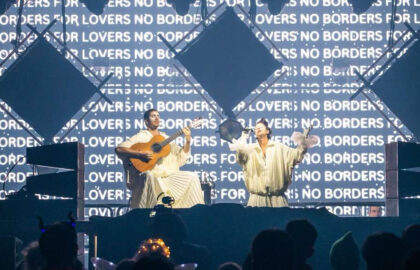
An ethereal structure of steel and light, CATE reimagines ritual architecture—where movement becomes communion and space becomes transmission.
CATE—its name a nod to cathedral—reimagines the sacred architecture of gathering. Where cathedrals once served as sites of spiritual convergence, CATE becomes a modern-day altar for dance and communion.
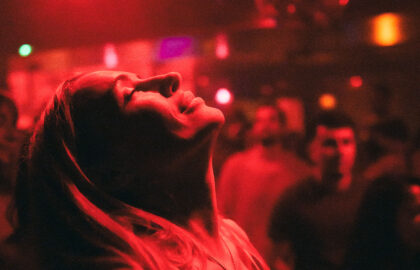
Bathed in light, layered with frequency, and awakened by movement, it offers a space where the spectacular becomes sacred—where bodies become vessels and rhythm becomes revelation.
A multi-tiered structure composed of industrial containers, scaffolding, steel, and light, CATE draws from brutalist design to express both monumentality and modularity. It stands as a physical embodiment of CRANIA’s commitment to post-functional aesthetics, where each element serves not only a spatial purpose, but a symbolic and social role.
CATE reflects a 5D design philosophy—integrating frequency, intention, and immersive experience. Conceived by a constellation of creative minds, it is attuned to both structure and signal.
Here, sound becomes structure, performance becomes prayer, and light becomes language.
It is a portal as much as it is a stage—a vessel for transmission where art and ritual commune.
CRANIA: The Future, Now
More than a test site, CRANIA is a living archive—where applied imagination meets regenerative practice.
It doesn’t ask what the future of travel, hospitality, or work might look like—it shows you.
It challenges extractive tourism and passive design. In its place, it offers embodied agency, radical creativity, and integrated regeneration.
CRANIA is not where the journey ends.
It’s where a new one begins.
For those ready to reimagine how we live, gather, and evolve.

To learn more about the volunteer program. Email labs@craniareclaim.com.