
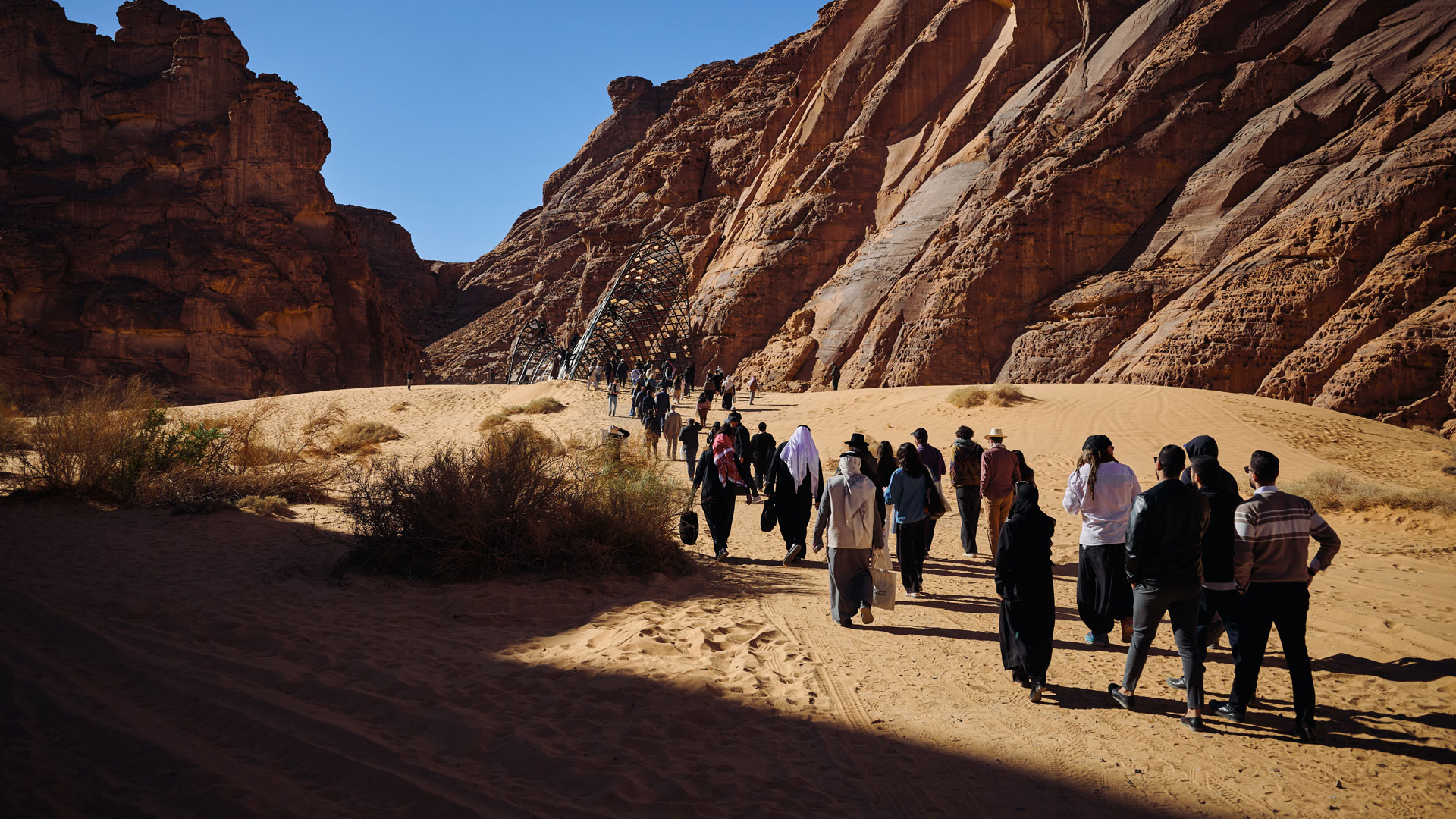
AlUla, Saudi Arabia: Opening Week of AlUla Arts Festival. Some places announce art with a clamour, demanding attention.
Then there are places like AlUla, where art arrives as if it has always been waiting, quietly, beneath the surface.
Walking through Desert X AlUla 2026, it becomes clear that this is not an exhibition imposed upon the land. It is one that emerges from it — from ancient waterways, sculpted canyons, memory-laden stone, and the deep silence that teaches you how to listen again.
This fourth edition of Desert X AlUla opens under the theme Space Without Measure, inspired by the spiritual and poetic language of Kahlil Gibran. But here, space is not abstract. It is physical, emotional, sonic, and profoundly human.
A Landscape That Has Always Been a Canvas
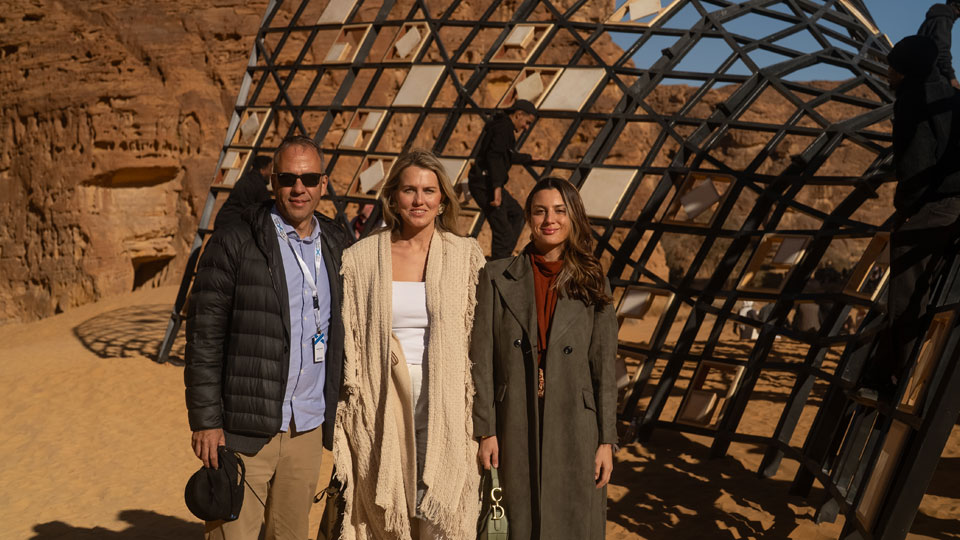
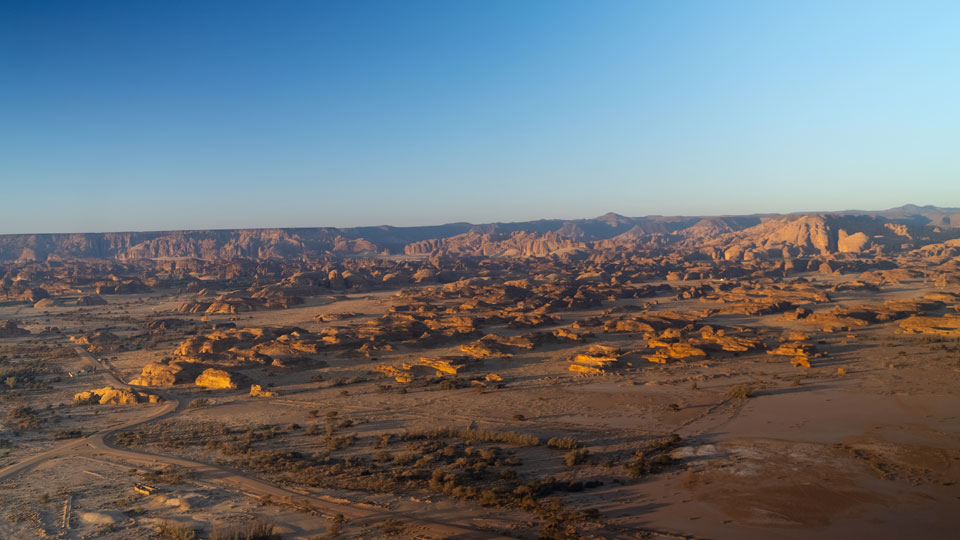
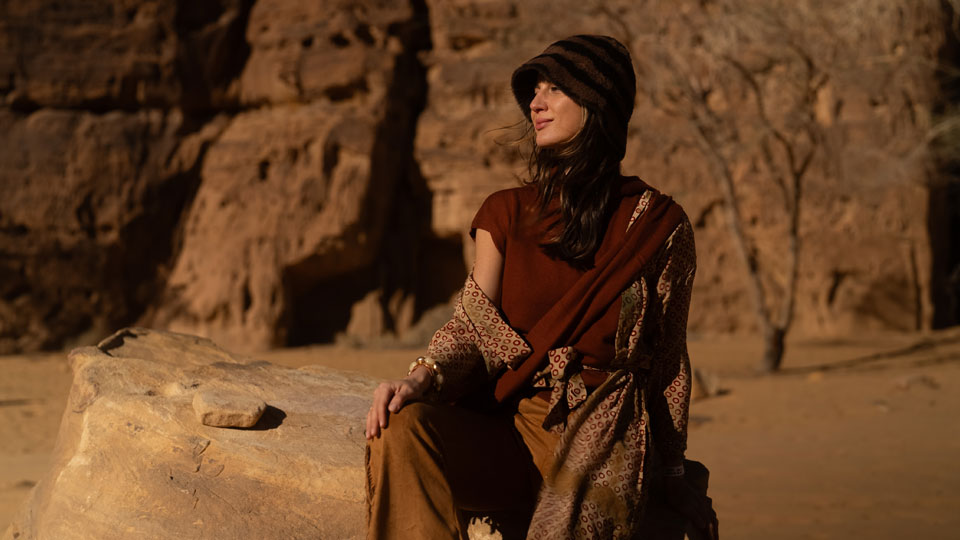
AlUla’s story is inseparable from artistic expression. From the inscriptions etched into rock faces across the region—most notably at Jabal Ikmah—to its long history as a crossroads of trade, pilgrimage, and cultural exchange, this landscape has carried stories for millennia. The nearby ancient city of Dadan stands as a testament to these early civilizations, even as the surrounding desert preserves their written voices in stone.
Desert X AlUla continues that lineage. Inaugurated in 2020 as the region’s first public art biennale, the exhibition brings together Saudi, regional, and international artists to create site-specific works that respond directly to the desert’s geography, ecology, and spirit.
Here, landscape art here is not about spectacle. It is about presence — about how the body moves through space, how sound behaves in stone, how light transforms meaning as the sun lowers.
As Sumantro Ghose, Artistic Programming Director at the Royal Commission for AlUla, reflected during opening week:
“AlUla doesn’t ask artists to leave a mark. It asks them to listen first. The most powerful works here are not those that dominate the landscape, but those that allow the landscape to speak back.”
Encounters in the Valley: Art Felt, Not Just Seen
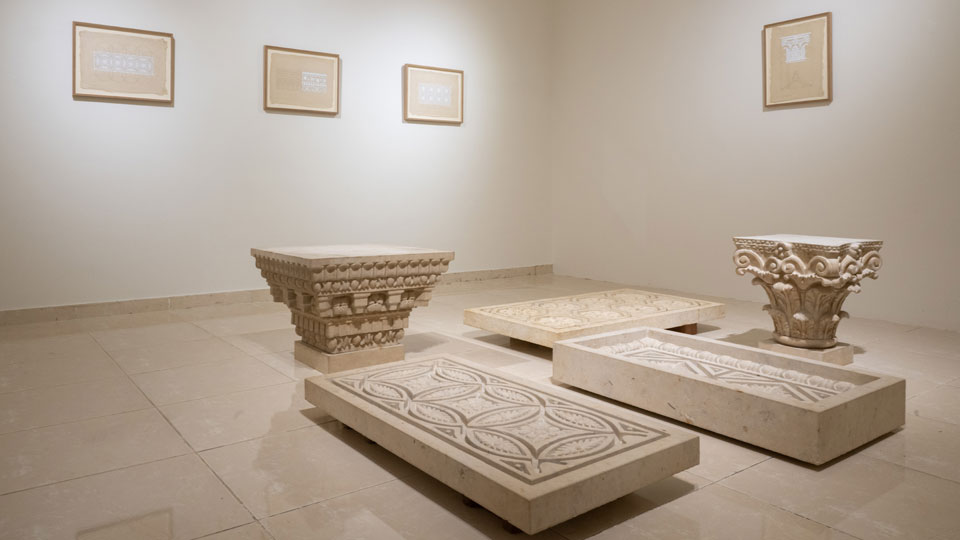
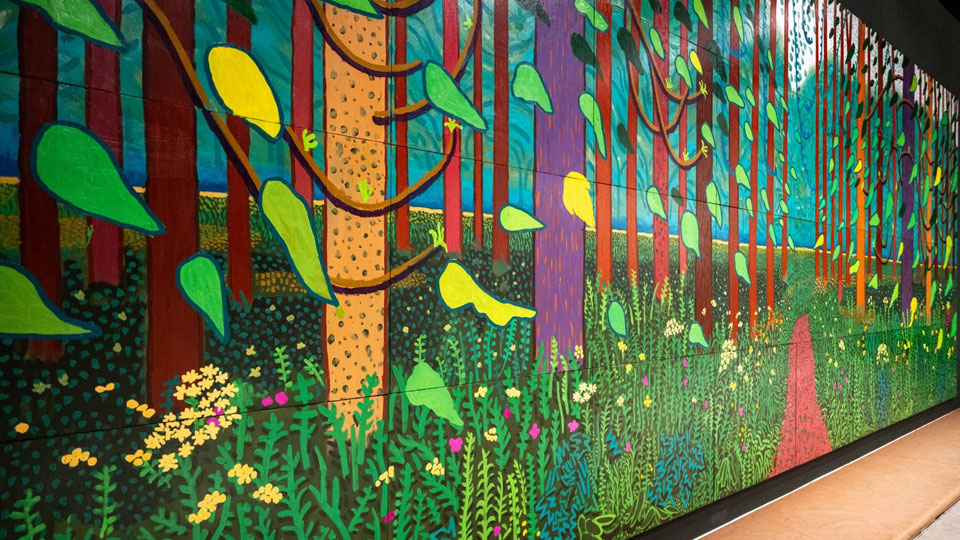
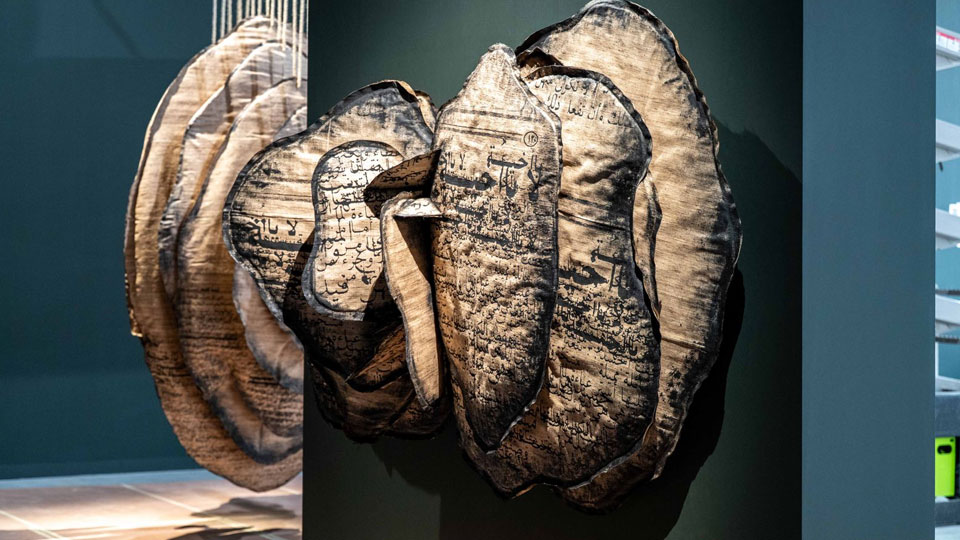
Tarek Atoui — The Water Song
Stepping deeper into the valley where Tarek Atoui’s work unfolds, sound becomes something you do not just hear — you enter it.
At first, the tones feel raw and elemental, almost horn-like, echoing against the canyon walls. But as you move further in, the sound shifts. It becomes melodic, layered, intimate. The vibrations travel through the stone, into your chest, into your body. The desert seems to become an instrument — breathing, resonating, responding.
This is not a performance you stand apart from. It holds you. It recalibrates the way you listen.
Bahraini-Danish — Bloom
(Batool Alshaikh, Maitham Al Mubarak, Christian Vennerstrøm Jensen)
In a landscape defined by stillness, the kinetic work by the Bahraini-Danish collective feels essential.
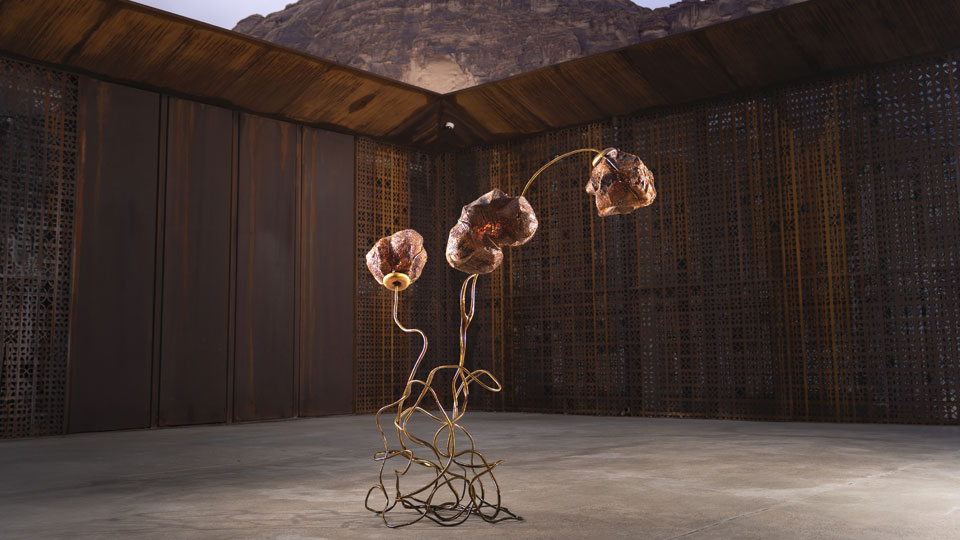
You are invited to push, spin, and activate the sculpture — and in doing so, you begin to realise how much movement the desert contains beneath its quiet surface. Geological time, wind, memory, human presence — all in motion, always.
There is joy in this interaction. A reminder that energy needs stirring, that play has a place even in the most ancient of environments. The work becomes a dialogue between hand, object, shadow, and sun — constantly changing, never fixed.
Sara Abdu — A Kingdom Where No One Dies: Contours of Resonance
Sara Abdu’s work is one of quiet power.
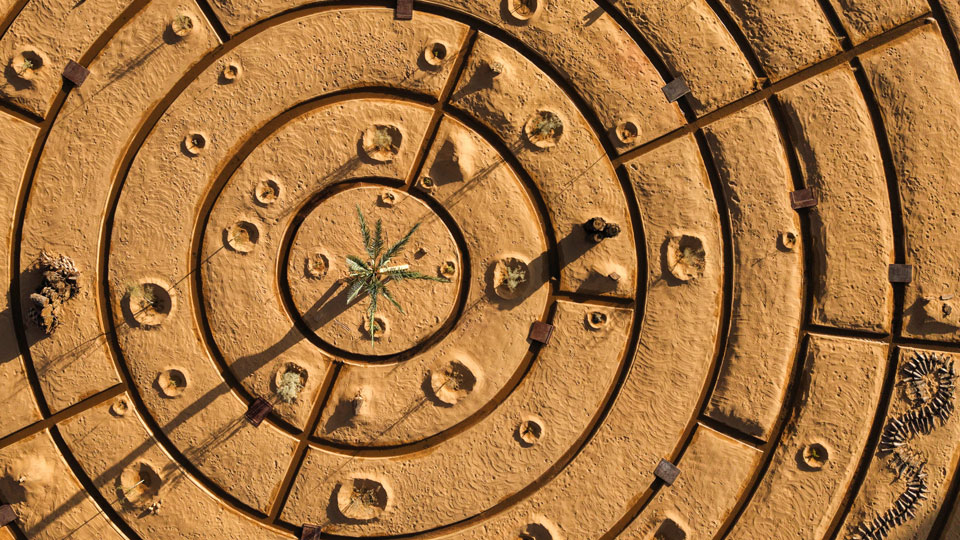
Using rammed earth and the sands of AlUla and Yemen, she transforms her own voice — recorded reading a poem — into sculptural contours. What emerges feels like a new mountain range, echoing the geological strata that surround it.
The result is iconic yet deeply intimate. Light caresses the edges softly. Sound becomes form. And when you leave, what stays with you is not noise or spectacle, but peace — a rare and grounding stillness that lingers long after.
Mohammed AlSaleem (1939–1997) — Sculptural Works
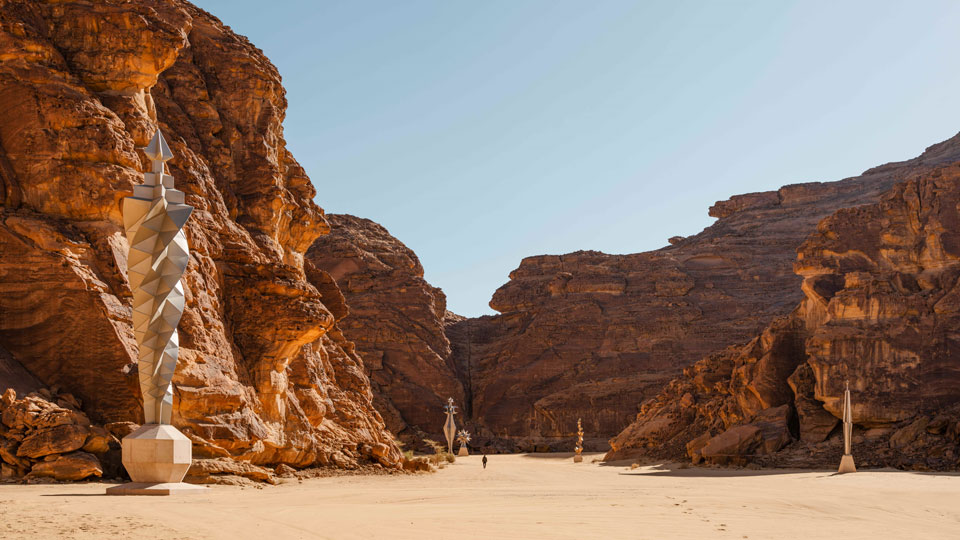
The inclusion of Mohammed AlSaleem’s sculptures is one of the exhibition’s most moving gestures.
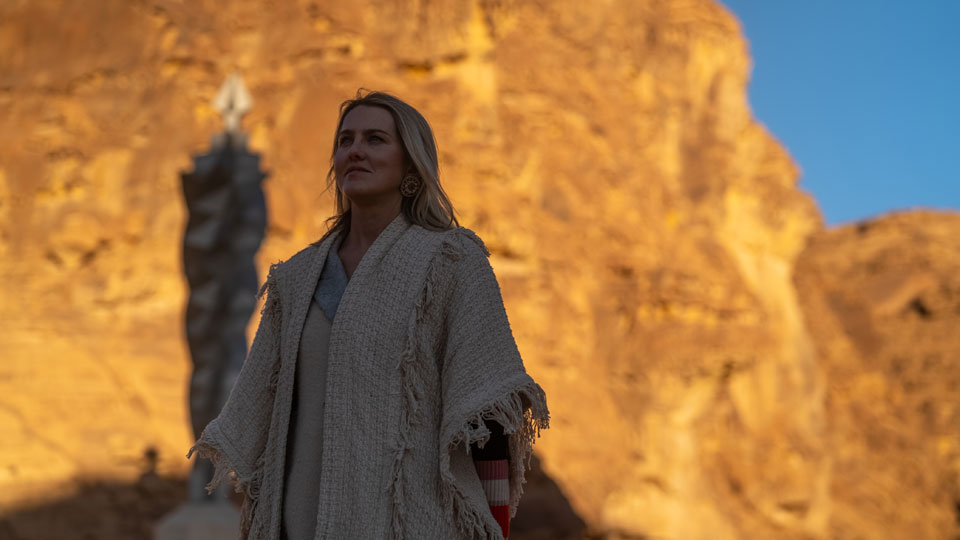
A pioneer of Saudi modernism, AlSaleem’s works are positioned with extraordinary sensitivity. As the sun begins to set, they catch the light with precision — becoming the last illuminated forms as the valleys fall into shadow.
In that moment, history feels present. His geometric forms — symbols of protection, resilience, communication, and collective strength — stand quietly, bridging generations. It is a tribute that feels both scholarly and deeply emotional, rooted in place and time.
Héctor Zamora — Tar HyPar
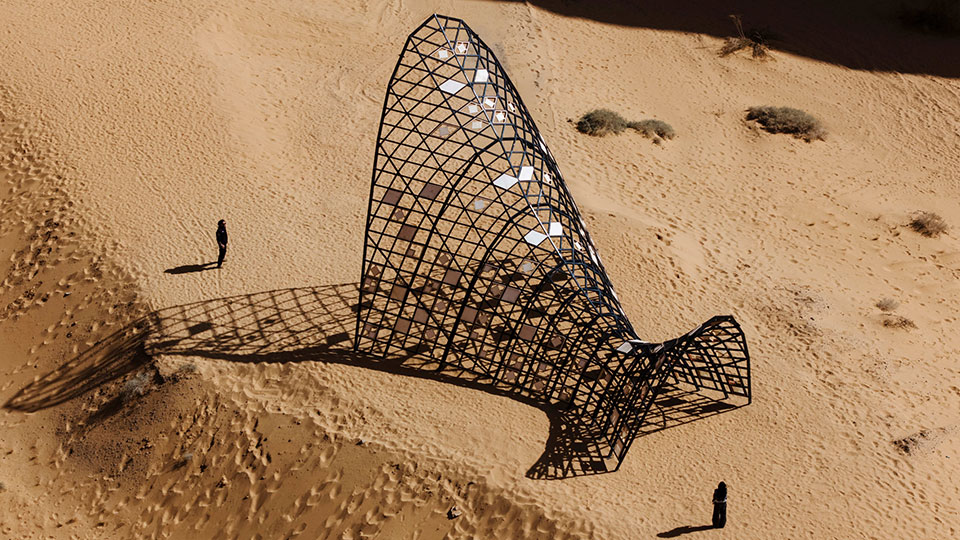
Zamora’s work transforms the desert into a gathering place.
The drum-like structure invites touch, rhythm, and participation. Soon, sound pulses through the valley. People gather. They dance, sing, laugh, and play. Strangers become collaborators.
What unfolds is communal, spontaneous, alive. This is architecture not as an object, but as experience — a social instrument that turns the landscape into a shared pulse.
Beyond Sculpture: Performance, Community, and the Living Program
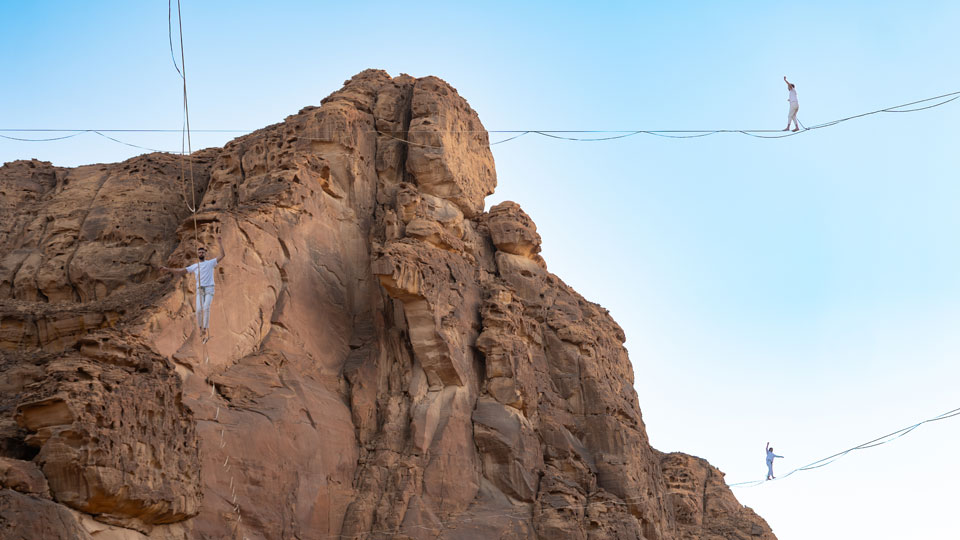
Desert X AlUla extends far beyond static works. Performances such as Vertigo, by Rachid Ouramdane and Nathan Paulin, presented by Villa Hegra, bring dance, highlining, and suspension into the canyons — bodies moving up to 35 metres above ground, flirting with gravity and silence.
The Public Programme reinforces the exhibition’s core philosophy: art is something you do, not just observe.
From guided art hikes and stargazing to workshops, performances, music, meditation sessions, and family programs, Desert X AlUla invites visitors to engage through movement, conversation, sound, and making.
AlUla and the Global Horizon
With figures such as Sumantro Ghose shaping artistic vision, and Iwona Blazwick, former Whitechapel Gallery Director, advising on the curatorial direction of Wadi AlFann, AlUla is not positioning itself as a follower of global trends, but as a place where new models of cultural engagement are being written.
This is not about importing culture. It is about revealing what already exists — and allowing contemporary artists to respond with humility, imagination, and care.
A Space Without Measure
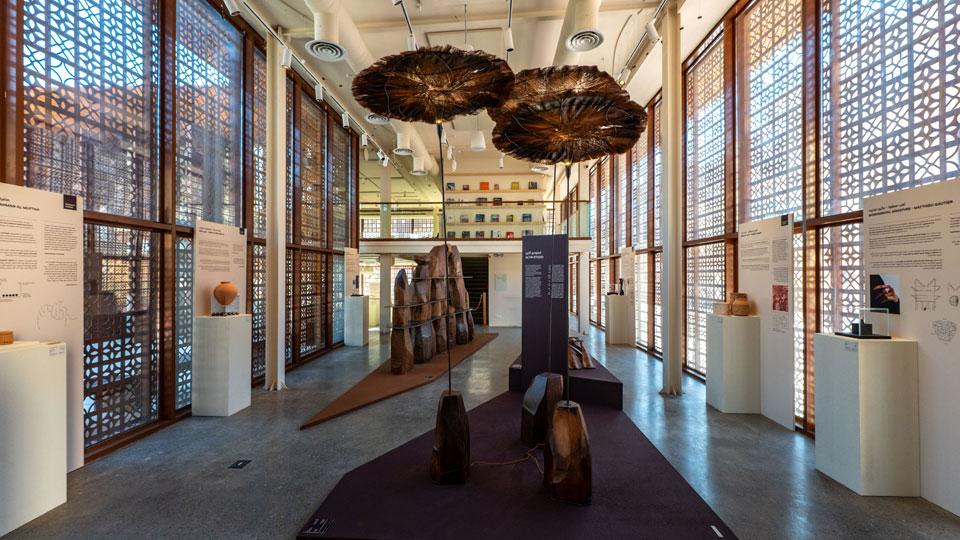
Desert X AlUla 2026 is not loud. It does not rush you. It asks you to slow down, to listen, to feel.
Here, art doesn’t compete with the landscape — it collaborates with it. And in that collaboration, something rare emerges: a sense of belonging within vastness, of connection within silence, of meaning without measure.


