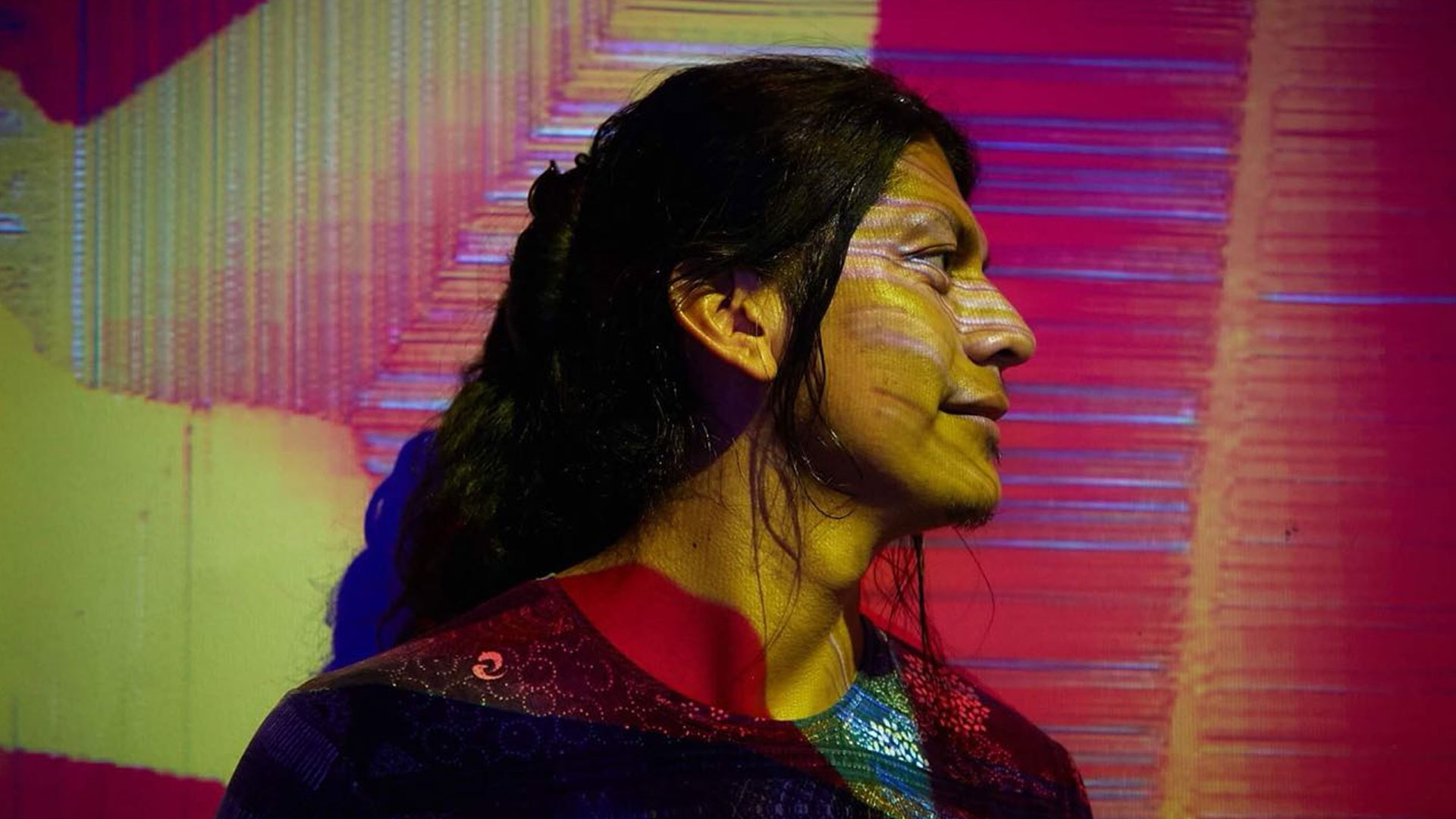
From Peru to the streets, markets and stages of the wider world, musician and artisan Guille Murela has built a life shaped by movement, cultural exchange and an enduring connection to his roots. There are many ways to understand a life spent travelling.
For some, it is a collection of countries, cities and landmarks, while for others it is defined by the people encountered, the lessons absorbed and the memories that remain long after the journey itself has ended.
For some, it is a collection of countries, cities and landmarks, while for others it is defined by the people encountered, the lessons absorbed and the memories that remain long after the journey itself has ended.
For Guille Murela, it is the latter that matters. His life has moved between cultures and musical traditions, from playing on streets and in markets to performing on international stages, while his work with Qori Artisans has given him another way to explore the relationship between creativity, heritage and the handmade.
Trying to map such a life geographically, however, proves difficult. When asked which places changed him most, Guille does not immediately reach for the names of particular countries. Instead, he thinks about the details that formed his earliest understanding of the world, beginning with family and the places close to home.
‘If I had to draw the sketch of my life, I would tell you that it was formed from my home, from the warmth of family, but also on every street, on every corner, every park. This is where I discovered that every tree has a root.’
That image of the tree has become something of a metaphor for his life. Travel has taken him far from where he began, but it has not severed the connection to those beginnings. If anything, moving through different cultures seems to have made him more aware of what he carries with him.
Guille remembers himself as a young child making a little suitcase and putting it beneath his bed, waiting for the opportunity to travel with his family. The image has stayed with him, and he sees a continuity between that child and the person he has become.
‘It’s essential to honour your origins, your history, both cultural and personal. I don’t see this as a journey, really, but rather as a way of life.’
This distinction is important. For Guille, travel is not a temporary period of movement followed by a return to normality. It is a way of experiencing the world, remaining open to what is unfamiliar while understanding that wherever you go, the places and people that came before remain part of you.
Finding Another Language
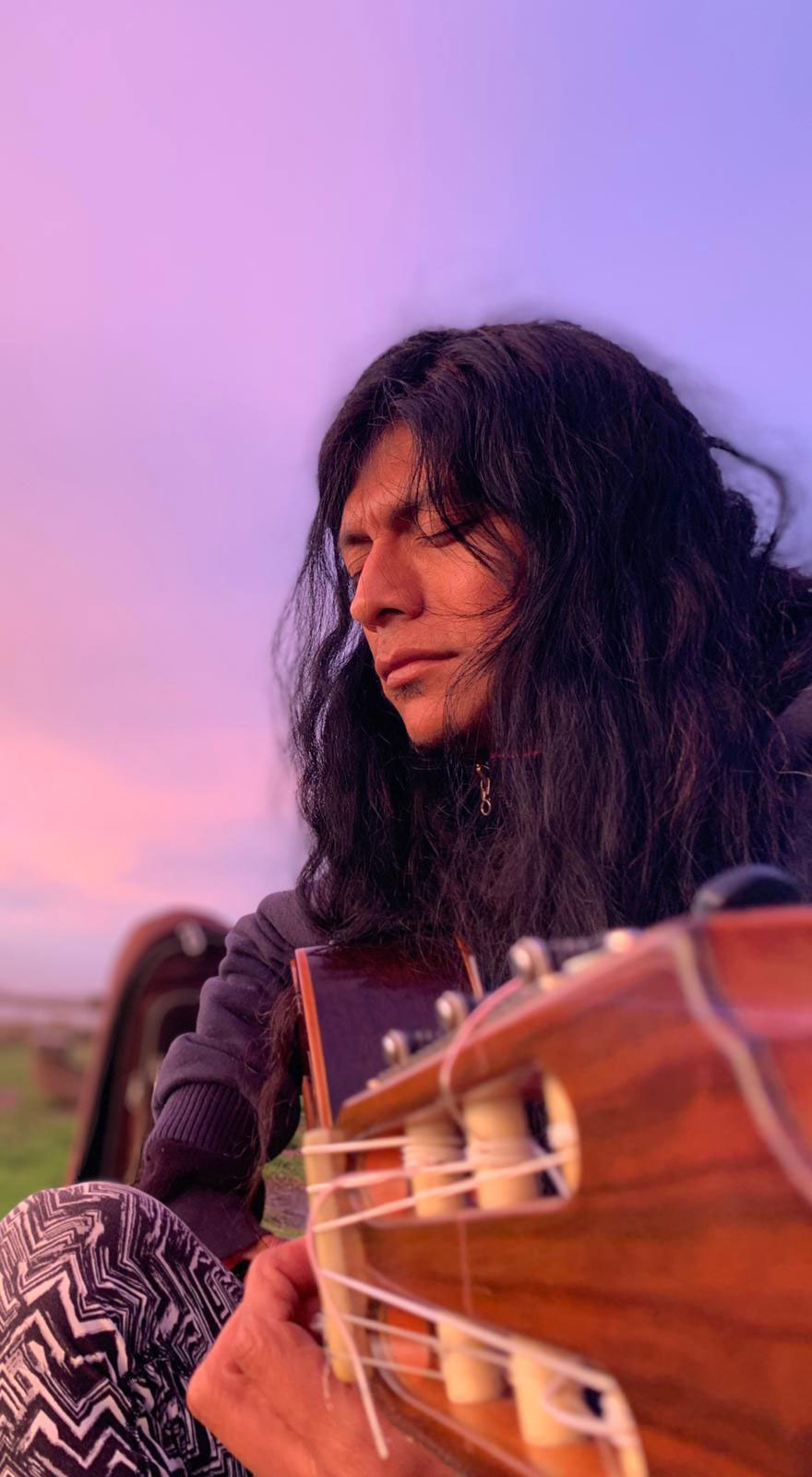
Music became one of Guille’s ways of communicating across those cultural boundaries. It has taken him into environments where a shared spoken language was not always available, yet music could create an immediate connection. Playing in streets and markets exposed him to people whose backgrounds and experiences were often completely different from his own, and those encounters became an education in the many ways people listen.
For Guille, however, music is not simply a universal language in which everyone hears the same message. Its power lies in the fact that each listener brings their own memories and emotions to it.
‘For one person, a melody brings memories, joys, or sorrows, because of things that happened or are happening at the moment a melody is performed.’
A musician may create a piece with one intention, but the listener can take it somewhere entirely different. A particular sound can evoke a childhood memory, remind someone of a person they have lost or simply create a feeling that cannot be easily explained. This is one reason Guille has a preference for instrumental music.
‘I still prefer to play without lyrics, because the way each person interprets is very particular.’
Without words to tell us what a song is about, there is greater freedom for the imagination. The listener becomes part of the process, filling the music with their own experiences.
Guille describes music as ‘the best example of a time machine’, a fitting description for something capable of transporting us instantly into another moment. Yet the musician’s role in creating that experience also comes with a responsibility, and he believes that listening is an essential part of learning how to perform.
‘The virtue of a musician is to listen and to remember that silence is the most important note on the musical scale, and why not say it, on the scale of life itself.’
It is a thought that reaches beyond music. In a world in which communication has become increasingly constant, the ability to be quiet, observe and listen has become valuable in itself.
From Sound to Something You Can Hold
That same instinct to communicate without relying entirely on words can be found in Guille’s work with Qori Artisans. Jewellery might appear very different from music, but for him the two practices share a fundamental purpose. They allow an idea to become something tangible.
‘Creating with your hands is a quiet way of saying something.’
The act of making is therefore as important as the object itself. Qori Artisans provides a space where ideas develop through interaction, experimentation and the physical process of working with materials. Rather than treating the finished jewellery as a fixed statement, Guille prefers to allow the person who encounters it to decide what it means.
‘It’s like a mirror, the reflection of the soul for each person. And for me, it is a gift when people identify with a piece. I leave it free for each person.’
The name Qori adds another layer to this idea. Qori means ‘golden’, but Guille explains that the meaning he connects with is more closely related to light and radiance than to the material value of gold itself. He refers to qori qilla, or ‘golden moon’, in which the emphasis is on the moon’s reflected light.
It is an interpretation that fits naturally with his wider understanding of culture. Light travels and reflects, just as traditions move between generations and are transformed by the people who inherit them.
‘Personally, yes, it is important to know where we come from in order to know where we are going.’
The People Along the Road
Travel has also given Guille an appreciation for encounters that might otherwise seem insignificant. Not everyone who enters our lives stays there, and not every important experience comes with a name or a clear beginning and end. Some people may cross our path only briefly, yet leave something behind that continues to influence us years later.
‘There are people whose names I don’t even remember anymore, because the moment was brief, but they left a light in my life.’
Among the most important were the travellers who became another kind of family, people who did not always know exactly where they were going but understood their purpose and kept moving. Guille remembers those journeys as a mixture of uncertainty, improvisation and discovery, experiences that continue to find their way into his music and his work.
‘They didn’t change me, but showed me another version of myself, and it is reflected every day in everything I do with my hands, with my silence, and with my music.’
That connection between experience and creation is also at the heart of Qori Artisans. For Guille, craftsmanship is not simply about producing something beautiful. It is a way of slowing down and reconnecting with the natural rhythm of making, something he believes is increasingly valuable in a world built around speed and convenience.
‘Craftsmanship and other arts are tools where one disconnects from time and just follows the natural rhythm of a process.’
He sees traditional craftsmanship not as something belonging only to the past, but as a form of knowledge that deserves to be understood anew. ‘Ancestral weavings are algorithms from the high-tech era,’ he says, pointing to the complexity and intelligence contained within traditions that have been passed down through generations.
That respect for what came before also shapes the way Guille thinks about his own work. He is reluctant to claim ownership over ideas and traditions that existed long before him, preferring to see himself as another person in an ongoing creative conversation.
‘It’s not my recipe; I just add more salt, pepper, and other spices, but in the end, it’s not mine.’
Perhaps this is where his music and jewellery meet most naturally. Both are shaped by time, practice, memory and the influence of others, while leaving space for the person experiencing them to find their own meaning. ‘Culture cannot be sold; it is only transmitted and passed on to those who are truly prepared with heart and humility in their process.’
And after a lifetime of travel, Guille still carries the same curiosity that began it all. ‘In my spirit, I still have that child who made his little suitcase and put it under the bed, waiting to travel with his family.’
Perhaps that is the most fitting way to understand Guille’s journey.
He has travelled far, but the further he goes, the more conscious he seems to become of what he carries with him: the sounds, traditions, people and memories that have shaped his way of seeing the world.
Through his music and his jewellery, he continues to pass those experiences onwards, adding his own thread to a story that began long before him and will, hopefully, continue long after.