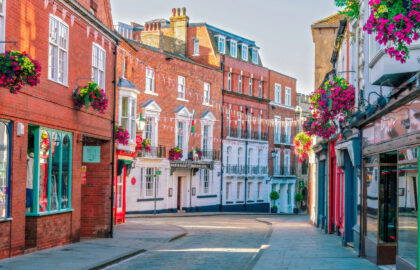
From medieval churches and red-sandstone cathedrals to Tudor towers and stately homes, a new book by Daniel Wilson explores the history, character and cultural meaning embedded in Britain’s built landscape.
Britain’s architecture tells its history in layers.
In cathedrals, ruined monasteries, country churches and grand houses, centuries of political ambition, local craftsmanship, religious belief and cultural exchange remain visible in stone, timber and brick.
That idea sits at the heart of Great British Architecture: Remarkable Stories of Our History and Heritage, a new book by historian and content creator Daniel Wilson, illustrated by Chris Henton and published by Frances Lincoln.
Bringing together 86 buildings from across Britain, the book looks beyond architectural style alone, exploring the stories, people and ideas that shaped some of the country’s most distinctive historic places.
Architecture as a Record of History
What makes Britain’s architectural landscape particularly compelling is its lack of uniformity.
Styles overlap. Traditions migrate. Materials change according to geography. Local needs meet foreign influences, creating buildings that reveal far more than the era in which they were constructed.
Wilson’s selection ranges from celebrated landmarks to places that are more easily overlooked, showing how architecture can become a record of power, faith, civic pride and everyday life.
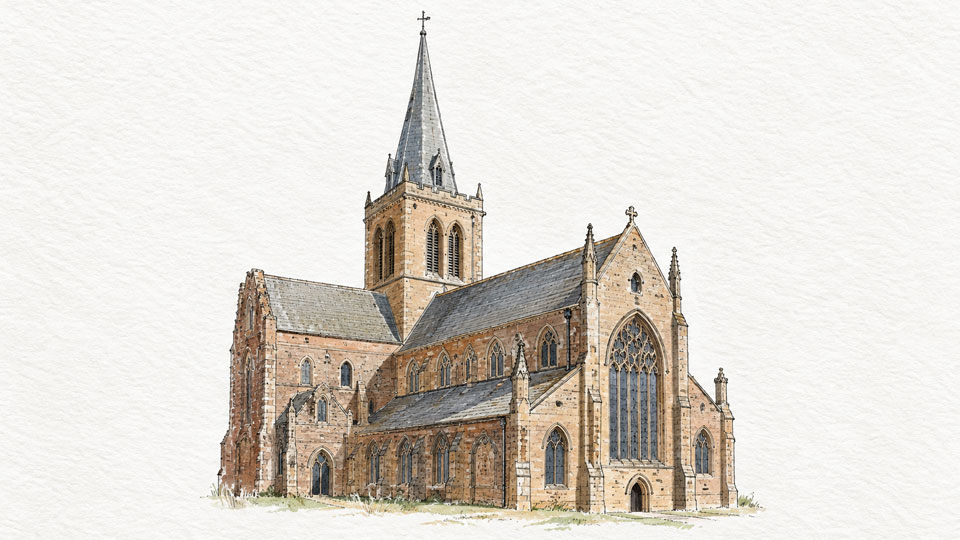
Among the examples featured is St Magnus’ Cathedral in Orkney, where red sandstone and a combination of Norwegian, Norman and Gothic influences reflect the islands’ complex cultural history.
Elsewhere, the medieval round-tower churches of East Anglia and Scotland demonstrate how architecture often evolved directly from local conditions, responding both to available materials and wider cultural exchange.
From Tudor Ambition to Modern Gothic
Some buildings reveal history through their scale and ornament.
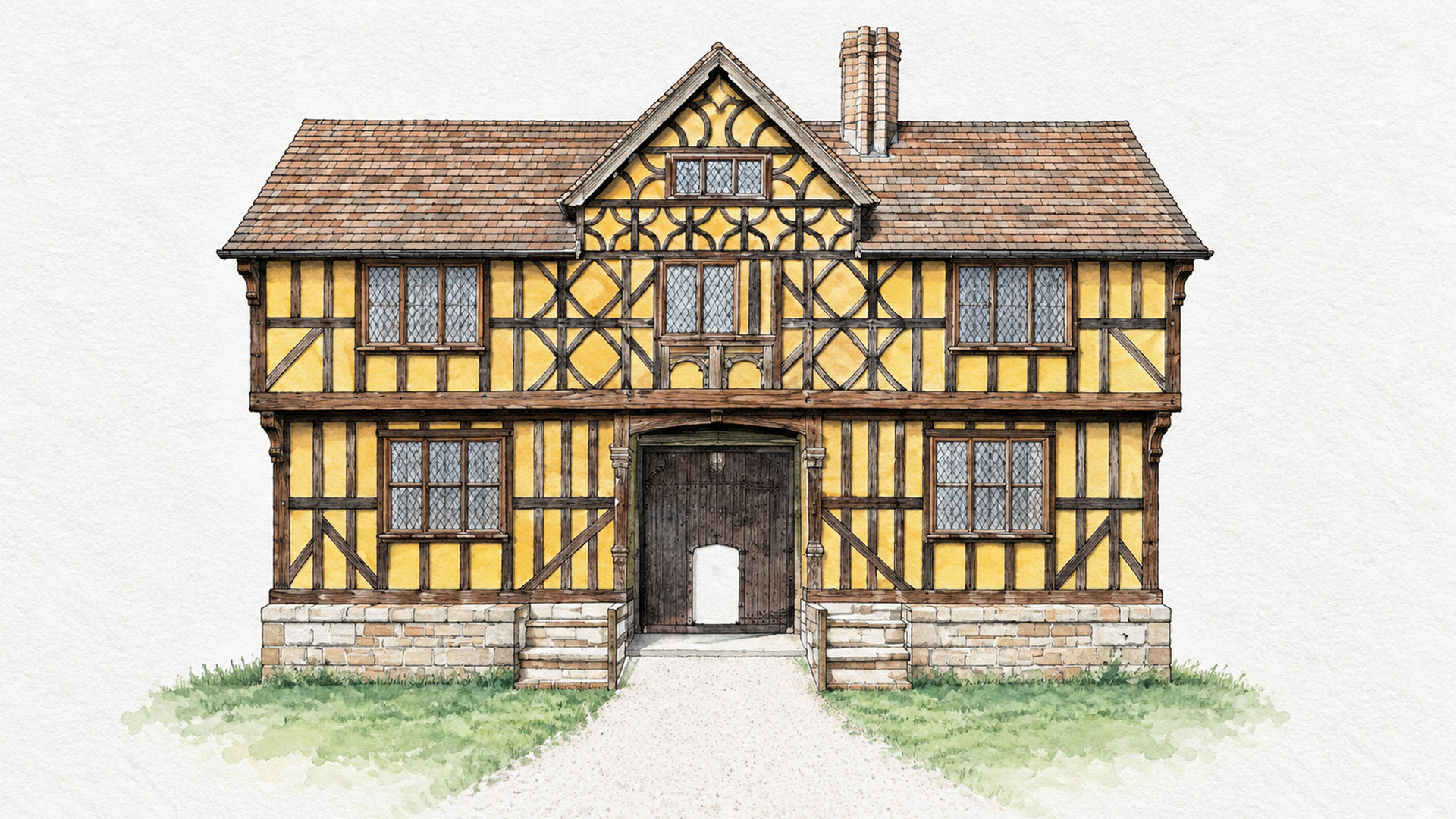
Layer Marney Tower, for example, reflects the ambition and status of Tudor England, distinguished by the unusual use of Italian terracotta decoration.
Others demonstrate how architectural traditions continue to evolve rather than disappear.
At St Edmundsbury Cathedral, a Gothic tower completed in the 21st century draws on medieval building traditions, connecting contemporary craftsmanship with techniques and visual language that stretch back centuries.
The result is a portrait of British architecture not as something fixed in the past, but as an ongoing conversation between generations.
Discovering the Overlooked
Wilson’s interest in historic buildings began close to home.
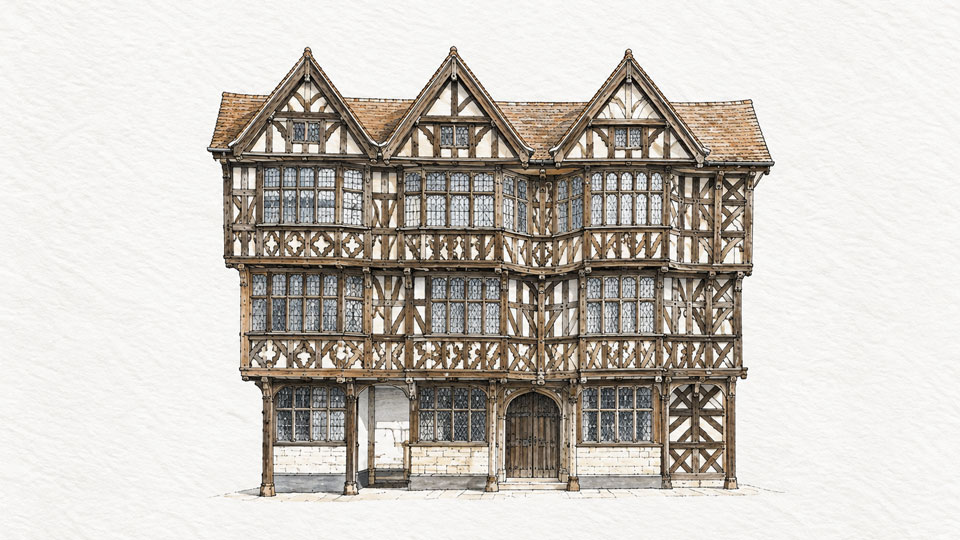
Growing up in Bury St Edmunds in Suffolk, he was surrounded by layers of architectural history, from ruined monasteries and Georgian houses to medieval parish churches.
Later, while studying Modern History and International Relations at the University of St Andrews, that interest developed into a deeper fascination with the stories and oddities hidden within Britain’s built heritage.
Through his online platform @greatbritisharchitecture, Wilson has since introduced those places to a wider audience through short-form digital storytelling.
The book expands that approach, moving from screen to page while retaining the same sense of curiosity: the idea that even a modest or overlooked building can reveal something significant about the people and culture that created it.
Looking at Britain Differently

In an age of rapid development and constant visual change, historic buildings offer a different relationship with time.
They invite us to look more closely.
To notice the materials chosen because of local geology, the decorative details used to communicate status, or the way one architectural tradition slowly merges with another.
Great British Architecture ultimately encourages a more attentive way of travelling through Britain — not simply moving between landmarks, but learning to read the places in between.
Because sometimes the most revealing stories are not found in museums or archives.
They are already standing around us.
Great British Architecture: Remarkable Stories of Our History and Heritage by Daniel Wilson, illustrated by Chris Henton, is published by Frances Lincoln on 8 October 2026.